

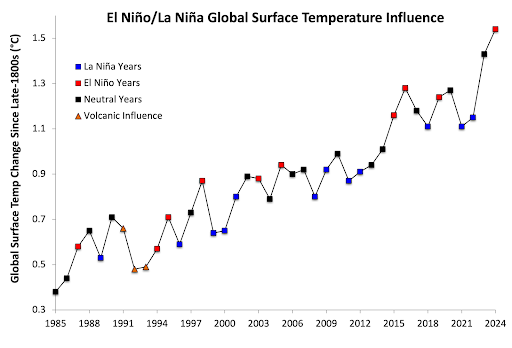
In a historic announcement, 2024 has been confirmed as the hottest year on record, eclipsing the previous high set in 2023.
This unprecedented milestone has been corroborated by major climate research institutions, including the National Oceanic and Atmospheric Administration (NOAA) and NASA, who synchronized their temperature data releases to underscore the urgency of the climate crisis.
A Year of Unrelenting Heat
The alarming trajectory of 2024’s temperatures began long before the year kicked off. By summer’s end, it was evident that 2024 was on track to shatter heat records. Here’s a brief timeline of the year’s extreme weather:
- June: A staggering 63 countries reported their hottest June ever. From July 2023 to June 2024, 138 countries recorded unprecedented high temperatures.
- July: The two hottest days ever recorded occurred on July 22 and 23.
- August: NOAA declared a 77% likelihood that 2024 would be the hottest year on record, with nearly certain placement in the top five. August became the hottest month in 175 years of NOAA records, with temperatures soaring 2.34°F above the average for August, according to NASA.
This culminated in the hottest summer recorded, surpassing previous averages by about 0.2°F, setting the stage for an unseasonably warm fall.
Despite the forewarnings, the official confirmation of 2024 as the hottest year hits hard. Extreme heat, one of the most lethal consequences of climate change, often goes underreported, leading to approximately 429,000 heat-related deaths globally each year.
Vulnerable populations, particularly the elderly, face heightened risks as heat exacerbates pre-existing health conditions.
The most severe impacts of this heat have disproportionately affected small island nations and developing countries, which often bear the brunt of climate change while receiving minimal attention in global discussions.
Understanding the Record Heat
Several factors contributed to 2024’s record-breaking temperatures, but two primary causes stand out:
1. Fossil Fuel Emissions
Fossil fuels remain the leading cause of global warming. In 2024, greenhouse gas emissions surged, pushing atmospheric carbon dioxide levels to around 422.5 parts per million—over 50% higher than pre-industrial levels. Without immediate action to reduce fossil fuel reliance, these emissions will continue to escalate, driving temperatures higher.
2. El Niño Phenomenon
The El Niño climate pattern significantly influenced global temperatures, particularly early in the year. This natural occurrence raises surface temperatures by warming the Eastern Pacific Ocean. Although El Niño’s effects diminished mid-year, the residual warmth kept temperatures elevated through the autumn months.
Notably, 2024 surpassed the previous record set during the last major El Niño event in 2016 by approximately 0.25°C.
While El Niño played a role in the heat, studies indicate that climate change’s impact is becoming more dominant. Research from World Weather Attribution highlights that the effects of climate change increasingly overshadow natural weather phenomena.
Other Contributing Factors
While fossil fuel emissions and El Niño were the main drivers, other factors—such as variations in cloud cover allowing more solar energy to reach the Earth’s surface—also contributed to rising temperatures. However, these influences pale in comparison to the impact of fossil fuels.
The Human Cost of Rising Temperatures
The implications of rising temperatures extend beyond statistics; they manifest as devastating weather events. The World Meteorological Organization reported that the U.S. faced 41 days of extreme heat in 2024. Additionally, the year saw:
- Hurricanes: Five hurricanes, exacerbated by climate change, resulted in 200 fatalities and widespread devastation.
- Flooding: Record rainfall led to catastrophic floods globally, with 15 out of 16 analyzed events intensified by climate change.
- Tornadoes: The worst tornado season since 2011 struck, causing significant destruction.
- Wildfires: North America experienced ongoing wildfires fueled by dry conditions and soaring temperatures.
The UN reported that climate change intensified 26 out of 29 major weather disasters in 2024, resulting in over 3,700 deaths and displacing millions. It was undoubtedly a challenging year for humanity.
What Lies Ahead in 2025?
With 2024 officially recognized as the hottest year on record, what can we expect in 2025? There’s a possibility of a slight cooling trend, especially if the El Niño phenomenon transitions into its counterpart, La Niña.
However, neutral conditions in the Pacific are more likely, according to recent forecasts.
A minor decrease in annual temperatures does not equate to a resolution of the climate crisis. Without addressing the root cause—greenhouse gas emissions from fossil fuel combustion—we risk repeating or surpassing the record heat of 2024.
