
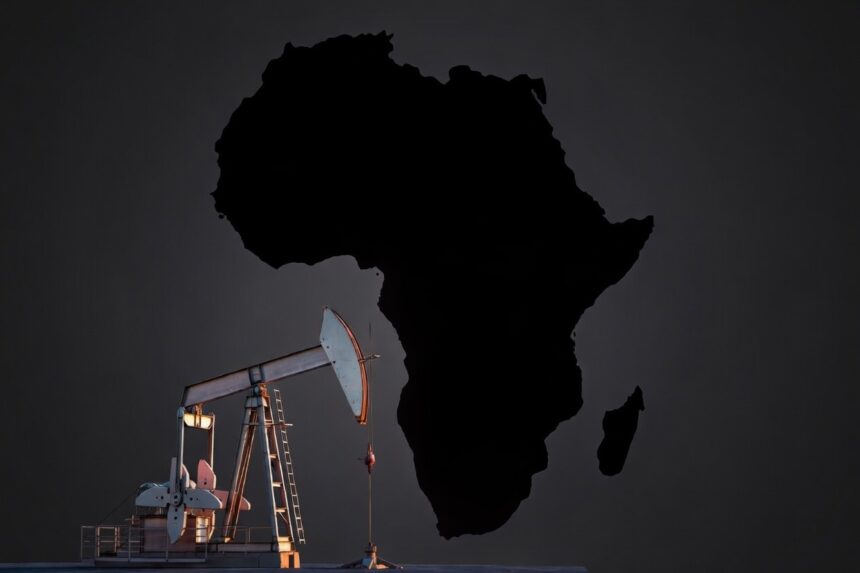
The immediate policy response across much of Africa is likely to focus on fiscal containment and debt management.
Derrick Opar, One Planet Agency
African governments are scrambling to cushion their economies from surging oil prices and broken supply chains after the US-Israel war Iran halted tanker traffic through the Strait of Hormuz.
The strategic chokepoint, which carries around a fifth of global crude and LNG supplies, has seen shipping largely grind to a halt since late February. Brent crude has climbed from about $65 a barrel at the end of February to more than $80 this week, delivering a sharp inflationary shock to import-dependent nations.
“Markets are now pricing in the equivalent of a full four‑week halt in flows through Hormuz,” said Daan Struyven, head of oil research at Goldman Sachs, after the conflict pushed traders to add a risk premium of roughly US$14 per barrel.
Egyptian President Abdel Fattah al-Sisi has warned that a prolonged Gulf war imperils his country’s economic lifeline—the Suez Canal—after Cairo already lost an estimated $10 billion in revenue due to a reduction in shipping traffic after Israel’s 2023 invasion of Gaza.
Diplomatically, the continent is split. South Africa, Mauritania and Sudan have openly condemned attacks on Iran, while most governments have maintained a neutral or silent stance, wary of straining ties with Gulf partners.
The biggest risk for ordinary citizens is the rapid rise in living costs. Higher energy prices are expected to feed quickly into transport, electricity and food, stoking imported inflation across the continent. Many countries, already carrying heavy dollar-denominated debt, now face higher servicing costs that threaten to squeeze spending on development.
That pressure can force difficult fiscal decisions, with governments forced to cut spending, delay infrastructure projects or reduce subsidies to contain widening budget deficits.
The effect will be felt most sharply in urban households, where fuel and transport costs make up a large share of daily spending.
Producers such as Nigeria, Angola, Algeria and Libya stand to benefit from stronger oil revenues if prices remain elevated.
Gold exporters may also gain. Investors often shift money into safe-haven assets during geopolitical crises, supporting demand for bullion. That could lift export earnings for producers such as Ghana, South Africa and Mali.
Yet those gains rarely offset broader economic pressures across the continent, where most countries remain net energy importers.
This comes as protests broke out across several northern Nigerian states after the killing of Iran’s Supreme Leader, Ali Khamenei, in an Israeli air strike during a joint US-Israeli military operation on Saturday.
Demonstrations were reported in Gombe, Niger, Kano, Bauchi, Yobe and Sokoto, regions that host a large share of Nigeria’s Shiite population. Nigeria is home to the largest Shiite community in Africa, many of whom regard Khamenei as a spiritual authority.
The unrest underscores how Middle East conflicts can reverberate far beyond the region, particularly in countries with religious or political ties to the parties involved.
Abuja, however, has moved cautiously. The Nigerian government has avoided aligning itself with either Iran or the US-Israeli coalition, instead maintaining a carefully balanced diplomatic stance as tensions spill onto the streets.
The immediate policy response across much of Africa is likely to focus on fiscal containment and debt management.
Several countries have already pursued debt restructuring after the pandemic. Zambia defaulted in 2020 before reaching a restructuring agreement with creditors in 2023. Ghana suspended external debt payments in 2022 and later negotiated a restructuring deal with official lenders.
Longer-term responses are also emerging. Policymakers increasingly frame regional trade and economic diversification as a buffer against global shocks.
The African Continental Free Trade Area aims to deepen intra-African trade and reduce dependence on external supply chains — a vulnerability exposed repeatedly by geopolitical crises.
For now, however, the continent remains largely a price-taker in global energy markets. And as long as the conflict keeps the Strait of Hormuz unstable, African economies will continue to feel the shock through higher fuel bills and tighter public finances.
OPA News
