
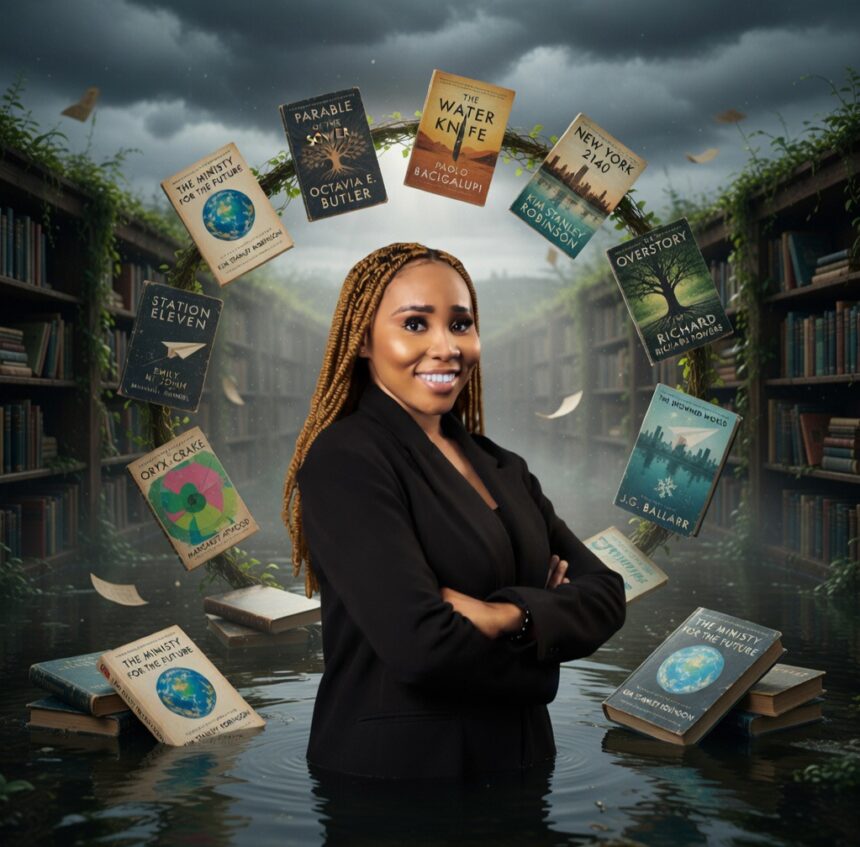
At present, climate fiction inhabits a delicate space as a mirror of the planet’s unfolding crisis and a probe into the human mind’s capacity to grapple with the weight of the future.
Nympha Ozougwu, One Planet Agency
Climate change can feel abstract until it’s shown through stories. That’s where climate fiction comes in. It gives shape to the experiences and consequences of a warming world, turning something distant into something we can see and feel.
A few decades ago, the idea of climate and literature coming together might have seemed unlikely. Today, climate fiction is a recognised part of contemporary storytelling. It has even grown enough to inspire new awards, including The Climate Fiction Prize launched in 2024. If writers act as early sensors of society, then this rise suggests that stories remain one of our strongest tools for understanding the world around us.
But as more novels and short stories take on environmental themes, a question emerges. Do these stories help readers engage with the reality of climate change, or do they risk deepening feelings of helplessness and fear?
Eco‑anxiety is now widely discussed. PubMed Central’s 2025 research describes it as an awareness of the planet’s vulnerability that can affect daily life. Given the scale of the climate crisis, this reaction is understandable.
So where does the value of climate fiction actually sit? Is it in the act of writing, the experience of reading, or the influence these stories have on people who encounter them? These questions matter because climate change is everywhere in public conversation, yet we rarely talk about how climate stories affect our emotional wellbeing.
Recent novels show how wide the genre has become. Some imagine harsh futures, while others focus on intimate, character‑driven stories shaped by environmental disruption. They explore relationships, moral choices and the emotional weight of living in a changing world. This intensity invites readers to reflect on their own lives and futures.
Research on Oana Aristide’s Under the Blue suggests that some climate‑focused novels can reinforce strong psychological responses, even resembling climate‑related trauma. This raises another important question. If sustainability is about protecting and preserving, what responsibility do storytellers have when their work triggers anxiety or affects mental health?
Writers, publishers and educators now face a shared challenge. How do we tell the truth about the climate crisis without overwhelming people? And how can culture and media help readers stay informed while also supporting emotional resilience?
Exploring this balance may require new approaches to storytelling. Different forms, voices and structures could help writers communicate urgency while staying mindful of how readers process fear and uncertainty.
For now, climate fiction sits in a careful space. It reflects the crisis unfolding around us while also testing how much the human mind can hold as it imagines the future.
OPA News Agency
