

The most powerful climate technology in the waste sector isn’t a machine but a person separating their waste, and a waste picker turning that act into climate action.
By Cecilia Allen, Global Zero Waste Cities Program Lead, GAIA for OPA News
Several weeks ago, we were reminded that landfills are among the largest sources of methane emissions into the atmosphere through a study conducted by the University of California, Los Angeles (UCLA), which identified the top 25 waste disposal facilities with the largest methane emissions, detected via satellite monitoring by Carbon Mapper.
These 25 waste disposal sites emit 3.6 to 7.5 tons of methane per hour. To put into perspective, a landfill that emits 5 tons of methane per hour produces as much global warming as 1 million Sports Utility Vehicles (SUVs) in a year.
We have known this for a long time, and now we have more compelling data showing that this is a serious and urgent global environmental problem. Methane is a gas that traps over 80 times more heat than carbon dioxide.
This data also serves as a reminder that perpetuating waste disposal is an absurd and dangerous practice. Because it is a major driver to climate change, but also for multiple other reasons that range from environmental and health (air, water and soil pollution, wasting of materials) to ethical (which community is going to become the next sacrificed zone to host a landfill or incinerator? and will they have a say on that?), and even political (which public officer wants to site a new landfill or incinerator in increasingly densely populated areas?).
Reliance on technological fixes for the waste sector simply does not work. We can do better, much better. And for that, we need to count on people and make it simple. Cities that prevent waste generation and disposal, and keep materials within the economy or nature through reuse, recycling, and composting, rely on people to separate waste at source.
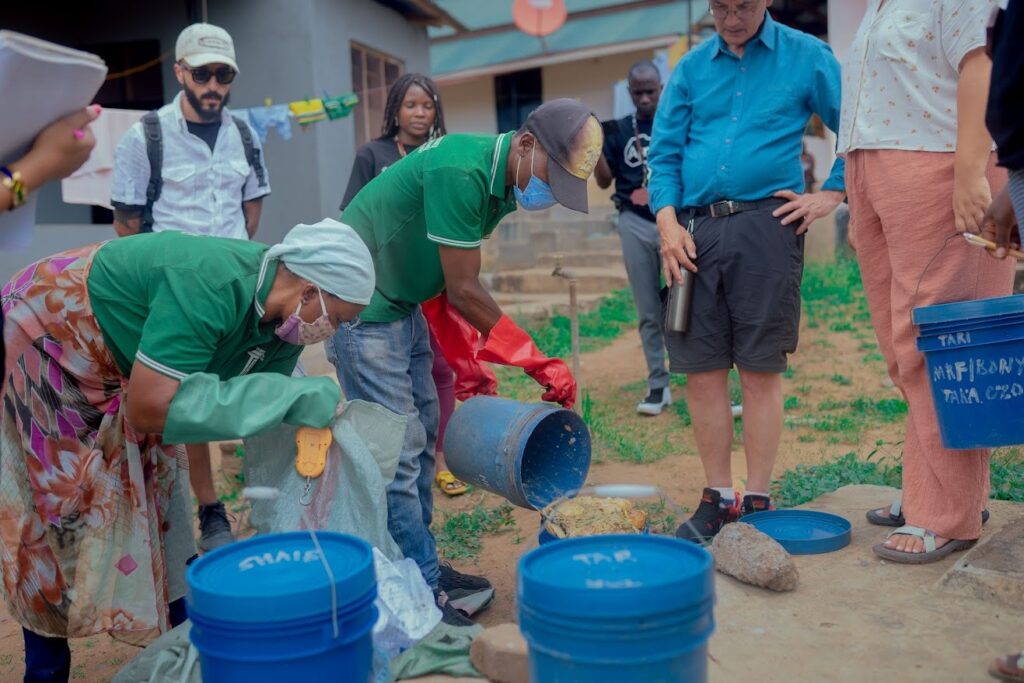
Waste is not a single material; it includes many different materials, from food scraps to paper to clothes to furniture to glass. Hence, the handling of discards cannot be conceived altogether. Separation at source is the cornerstone of high-quality, long-term material recovery.
In the so-called global south waste pickers are the cornerstone of recycling systems. They are sustaining the recycling economy and also recovering source-separated organic waste, such as food scraps and yard trimmings. They are doing a job that benefits everyone: recycling materials, saving landfill space, preventing methane emissions, sustaining a recycling industry and providing millions of poor families with an income to make a living, eat, get clothes, go to school, etc.
A new publication, “Managing organics with waste pickers: a briefing for policymakers”, by GAIA and the International Alliance of Waste Pickers, assesses the experience of waste pickers who are handling organic waste, preventing its disposal and associated methane emissions. These experiences are no small feat. In Pune, India, the waste-picker cooperative SWaCH, run predominantly by women, provides separate collection for 26,000 households, schools, and offices, and installs and maintains on-site composting and anaerobic digester systems. This service has been provided for over a decade, with great satisfaction from users, and one of the key aspects of its success is the relationships that waste pickers establish with citizens. The human aspect of it. Counting on people.
In Tanzania, the organization Nipe Fagio and Wakusanya Taka Bonyokwa Cooperative, formed by waste pickers, are providing a separate collection service that has the highest compliance rates in the country. The zero-waste system run in Bonyokwa, a ward in Dar es Salaam, is proud to have a 95% source separation rate. The program includes composting of source-separated organic waste and is also being implemented in other locations throughout Tanzania, including an on-site composting facility at a fresh produce market in the Mawasiliano district of Dar Es Salaam, which generates 2.5 tonnes of organic waste daily.
These and other experiences show that waste pickers are uniquely positioned to manage organic waste, as they have well-established relationships and logistics for the separate collection of dry recyclables, and with this, years of know-how. With recognition of them as workers, fair contracting and the creation of the enabling conditions for source separation, and infrastructure to manage the different waste streams separately, the pathway towards a much better approach to waste is there.
The report is intended to support government officials in improving their waste programs by describing successful experiences and identifying opportunities and barriers to establishing and scaling up waste-picker-led organic waste management programs.
One Planet Agency
