One Planet AgencyOne Planet AgencyOne Planet Agency
  • Home
  • Climate News
    • Politics
    • Justice
    • Finance
    • Business
    • Nature
    • Science
    • Carbon Markets
    • Explainers
    • Series
    • All news
  • Climate Tech
    • AI and climate
    • Campaigns
    • Companies
    • Innovations
    • Science
    • Training
  • Green Markets
  • People & Voices
    • Interviews
    • Opinion
    • Women
    • Guest Writers
  • Energy
  • Deep Dives
    • Investigate
    • Expert Opinion
    • Analysis
  • Multimedia
    • Pictures
    • Videos
    • Podcast
Reading: African women are fighting climate change from the bottom up, but the billions go elsewhere
Share
Notification Show More
Font ResizerAa
Font ResizerAa
One Planet AgencyOne Planet Agency
  • Home
  • Climate News
  • Climate Tech
  • Green Markets
  • People & Voices
  • Energy
  • Deep Dives
  • Multimedia
  • Home
  • Climate News
    • Politics
    • Justice
    • Finance
    • Business
    • Nature
    • Science
    • Carbon Markets
    • Explainers
    • Series
    • All news
  • Climate Tech
    • AI and climate
    • Campaigns
    • Companies
    • Innovations
    • Science
    • Training
  • Green Markets
  • People & Voices
    • Interviews
    • Opinion
    • Women
    • Guest Writers
  • Energy
  • Deep Dives
    • Investigate
    • Expert Opinion
    • Analysis
  • Multimedia
    • Pictures
    • Videos
    • Podcast
Have an existing account? Sign In
Follow US
One Planet Agency > Blog > Africa > African women are fighting climate change from the bottom up, but the billions go elsewhere
AfricaClimateClimate News

African women are fighting climate change from the bottom up, but the billions go elsewhere

By Nympha Ozougwu Last updated: May 6, 2026 4 Min Read
Share
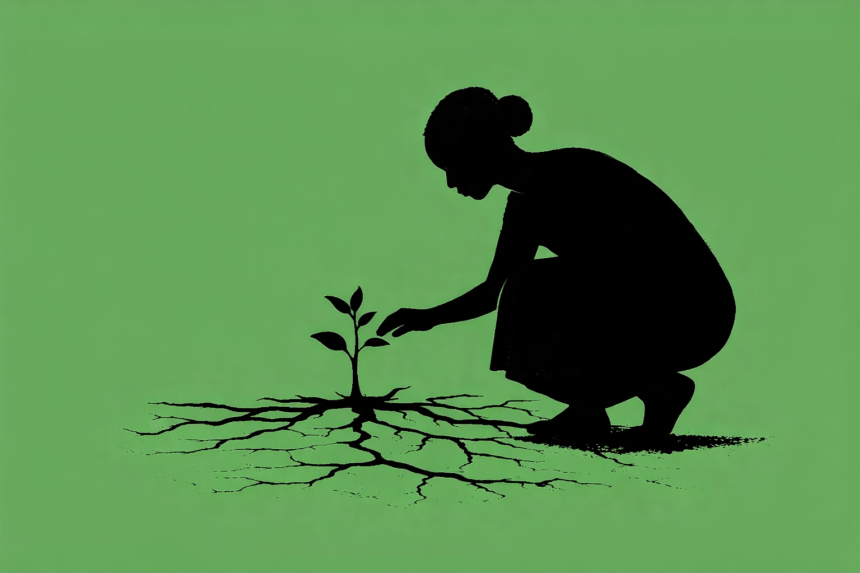
Graphics: OPA News Agency

The most effective climate adaptation in Africa is already happening, driven by women, and almost entirely unfunded.

Nympha Ozougwu, One Planet Agency 

Women across Africa continue to build grassroots responses to climate change with little institutional support, even as international climate financing continues to flow largely toward formal programs that often collapse once the money runs out.

This comes as Africa is still routinely described in global climate discourse as a future “vulnerability zone”, a framing that overlooks the daily adjustments already underway across the continent.

At a recent webinar, women from five countries described how they are managing climate stress through practical routines that have become central to household survival. 

The three day Green Skills Exchange Programme for Women in Africa, convened by the Lady Dynamique Network in partnership with One Planet Agency, brought together participants from Kenya, Tanzania, Uganda, Malawi and Nigeria. 

The organisers said the event was part of a growing effort to promote cross pollination of ideas among women working in the climate action space.

The women who gathered described an informal, decentralised system of climate adaptation already operating across the continent and held together by everyday decisions made at the household level.

Africa contributes less than 4 percent of global greenhouse gas emissions yet absorbs some of the world’s worst climate consequences, including erratic rainfall, prolonged droughts, and flooding that directly threatens food supplies and incomes. 

Women are managing most of that fallout, making up nearly half of the continent’s agricultural workforce, with roughly three quarters of employed women in Africa depend on farming or food-related work to survive, according to the Food and Agriculture Organisation.

“Climate action doesn’t always require big, complex solutions,” said Esther Moses Sangasa of Tanzania. “It can start with small, everyday actions. Meaningful change begins with conversations.”

Those conversations, repeated across households and communities, are doing work that formal policy has struggled to reach.

Susan Chisi of Malawi identified a structural problem at the heart of climate programming. International climate funding arrives in short cycles while the stress communities are absorbing compounds over decades. 

Grassroots groups, the ones most embedded in communities and most likely to endure, rarely see that money. “Women have to take the initiative to sit at the table where decisions are discussed and made,” she said, adding that real sustainability means ensuring community groups “can continue their work long after funding ends.”

Participants from Uganda, Nigeria, and Tanzania described remarkably similar patterns, with recycling, resource conservation, and energy saving operating as survival strategies woven into the rhythms of daily household life.

Seth Onyango of One Planet Agency said the distance between global climate governance and local climate reality is also a language problem. Emissions targets and temperature thresholds mean little to a woman deciding whether there will be enough rain to plant this season. Climate communication, he argued, gains traction when it speaks directly to food, health, and income.

OPA New Agency

Sign Up For Daily Newsletter

Be keep up! Get the latest breaking news delivered straight to your inbox.

By signing up, you agree to our Terms of Use and acknowledge the data practices in our Privacy Policy. You may unsubscribe at any time.
Nympha Ozougwu May 6, 2026 May 6, 2026
Share This Article
Facebook Twitter Email Copy Link Print
What do you think?
Love0
Sad0
Happy0
Sleepy0
Angry0
Dead0
Wink0
Leave a comment Leave a comment

Leave a Reply Cancel reply

Your email address will not be published. Required fields are marked *

YOU MAY ALSO LIKE

The future of waste management depends on people not machines

The most powerful climate technology in the waste sector isn’t a machine but a person separating their waste, and a…

Climate NewsEnvironment
May 25, 2026

Experts urge WHO to declare climate crisis a global health emergency

The climate crisis has no patient zero and no vaccine. A growing group of experts says that is exactly why…

ClimateClimate JusticeClimate News
May 19, 2026

East Africa braces for extreme rainfall and flooding as signs point to return of El Niño

A fresh El Niño is forming and East Africa is bracing for the familiar mix of heavy rain and fragile…

Climate News
May 11, 2026

Liberia steps up carbon market push with national data system plan

The country is betting that better climate bookkeeping could unlock international finance and a place in the booming global carbon…

Carbon MarketsClimate NewsEnvironmentFinance
May 8, 2026
We use our own and third-party cookies to improve our services, personalise your advertising and remember your preferences.
  • My Bookmark
  • Interests
  • Contact Us
  • Blog Index
  • Complaint
  • Advertise
  • Exclusives
  • Learn How
  • Support
  • Solutions
  • About Us
  • Terms And Conditions
  • Editorial Policy
  • Marketing Solutions
  • Industry Intelligence

Follow US: 

© 2025 One Planet Agency.  All rights reserved.

© 2025. All Rights Reserved. One Planet Agency
adbanner
AdBlock Detected
Our site is an advertising supported site. Please whitelist to support our site.
Okay, I'll Whitelist
Welcome Back!

Sign in to your account

Register Lost your password?