One Planet AgencyOne Planet AgencyOne Planet Agency
  • Home
  • Climate News
    • Politics
    • Justice
    • Finance
    • Business
    • Nature
    • Science
    • Carbon Markets
    • Explainers
    • Series
    • All news
  • Climate Tech
    • AI and climate
    • Campaigns
    • Companies
    • Innovations
    • Science
    • Training
  • Green Markets
  • People & Voices
    • Interviews
    • Opinion
    • Women
    • Guest Writers
  • Energy
  • Deep Dives
    • Investigate
    • Expert Opinion
    • Analysis
  • Multimedia
    • Pictures
    • Videos
    • Podcast
Reading: ABM Becomes First UNFCCC-Registered Non-Market Climate Finance Mechanism
Share
Notification Show More
Font ResizerAa
Font ResizerAa
One Planet AgencyOne Planet Agency
  • Home
  • Climate News
  • Climate Tech
  • Green Markets
  • People & Voices
  • Energy
  • Deep Dives
  • Multimedia
  • Home
  • Climate News
    • Politics
    • Justice
    • Finance
    • Business
    • Nature
    • Science
    • Carbon Markets
    • Explainers
    • Series
    • All news
  • Climate Tech
    • AI and climate
    • Campaigns
    • Companies
    • Innovations
    • Science
    • Training
  • Green Markets
  • People & Voices
    • Interviews
    • Opinion
    • Women
    • Guest Writers
  • Energy
  • Deep Dives
    • Investigate
    • Expert Opinion
    • Analysis
  • Multimedia
    • Pictures
    • Videos
    • Podcast
Have an existing account? Sign In
Follow US
One Planet Agency > Blog > Electric Vehicles > ABM Becomes First UNFCCC-Registered Non-Market Climate Finance Mechanism
Electric VehiclesEnergyEnergy

ABM Becomes First UNFCCC-Registered Non-Market Climate Finance Mechanism

By Victor Okeyo Last updated: January 21, 2026 3 Min Read
Share
ABM

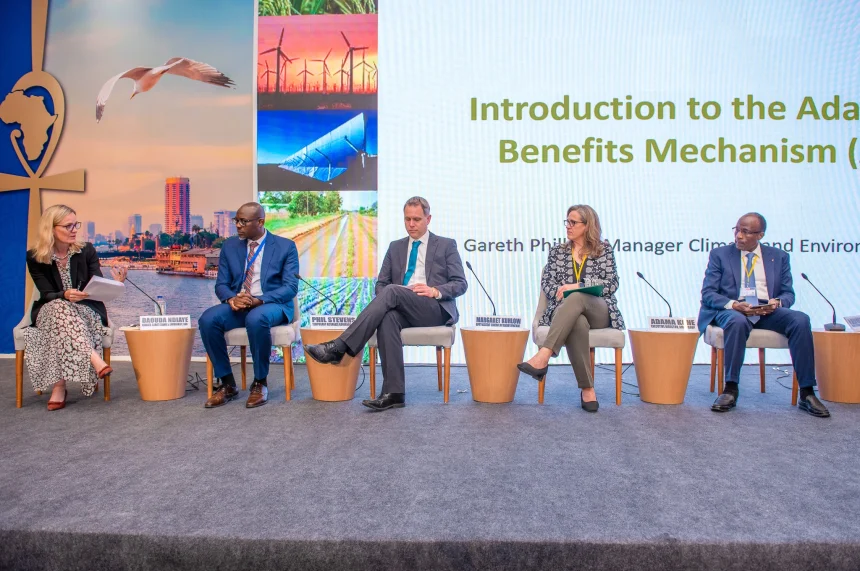
The Adaptation Benefits Mechanism (ABM), developed by the African Development Bank has become the first non-market approach registered on the United Nations Framework Convention on Climate Change’s Non-Market Approaches.

Climate change adaptation requires financial support, especially for Vulnerable nations to shift to green energy, and support key economic sectors like health, agriculture, and innovation. A recent report released by the Climate Vulnerable Forum (CVF), the Vulnerable 20 Group of Finance Ministers (V20), and the Bridgetown initiative shows that the climate finance needs of vulnerable countries are likely to exceed $490bn annually by 2030.

Consequently, there is a need to mobilize new and additional public and private sector finance to enhance climate change adaptation action. ABM is an innovative mechanism that will greatly benefit adaptation finance, as it can potentially speed up host countries’ transformation toward low-carbon, climate-resilient, and sustainable development pathways by certifying the value of resilience in terms of benefits and incremental costs.

The Adaptation Benefits Mechanism (ABM) certifies measurable adaptation benefits using strict methodologies and independent verification. It provides transparent data on resilience enhancements, co-benefits, and related financing, aiding in Paris Agreement reporting, SDG monitoring, and ESG frameworks.

By establishing Adaptation Benefits Supply Agreements with information users, the ABM allows project developers to monetize certified benefits, attract investment, and enhance transparency in adaptation costs.

“Tapping into new funding sources and engaging new actors through the ABM will accelerate and scale-up the dissemination of the myriad of new and already existing adaptation technologies and solutions that are not otherwise affordable, especially to those who need them most,” said Prof. Anthony Nyong, Director for Climate Change and Green Growth at the African Development Bank.

He further called upon donors and investors with adaptation commitments to use the ABM to derisk adaptation investments for African project developers and help demonstrate ABM’s full potential.

Uganda submitted the mechanism, which has been piloted across Africa since 2019, to the UNFCCC during the COP29 in Baku 2024, with initial support from Nigeria, Kenya, Madagascar, Benin, Gambia, and Guinea.

International organizations, corporations and government agencies also backed the move, including the West-African Development Bank (BOAD(link is external)), the Center for International Forestry Research and World Agroforestry (CIFOR-ICRAF(link is external)), the Senegal Waste Management Authority (SONAGED(link is external)), SLAMDAM B.V.(link is external), SaniTap(link is external), Allcot(link is external) and Perspectives Climate Research GmbH(link is external).

TAGGED: ABM, Climate Vulnerable Forum, CVF

Sign Up For Daily Newsletter

Be keep up! Get the latest breaking news delivered straight to your inbox.

By signing up, you agree to our Terms of Use and acknowledge the data practices in our Privacy Policy. You may unsubscribe at any time.
Victor Okeyo January 21, 2026 January 31, 2025
Share This Article
Facebook Twitter Email Copy Link Print
What do you think?
Love0
Sad0
Happy0
Sleepy0
Angry0
Dead0
Wink0
Leave a comment Leave a comment

Leave a Reply Cancel reply

Your email address will not be published. Required fields are marked *

YOU MAY ALSO LIKE

Will cheap EVs from China wean Kenya off its second‑hand car dependence?

There is appetite for Chinese EVs but sparse charging infrastructure and taxes still discourage adoption. Seth Onyango and Derrick Opar,…

Climate NewsEast AfricaEnergyTechnology
April 15, 2026

Oil shock from Iran crisis clouds global shift to clean energy

Rising oil market turmoil linked to the Iran crisis is threatening to slow the global shift to renewable energy, as…

All newsClimateClimate NewsElectric VehiclesEnergyEnergyEnvironment
April 2, 2026

Kenyan manufacturers ramp up efficiency under stricter rules

Kenyan manufacturers are moving fast to cut waste and sharpen efficiency as tighter rules take hold. Officials say the changes…

Climate NewsEast AfricaEnergy
March 9, 2026

How African governments are adjusting to shocks from the war on Iran

The immediate policy response across much of Africa is likely to focus on fiscal containment and debt management. Derrick Opar,…

Climate NewsEnergy
March 5, 2026
We use our own and third-party cookies to improve our services, personalise your advertising and remember your preferences.
  • My Bookmark
  • Interests
  • Contact Us
  • Blog Index
  • Complaint
  • Advertise
  • Exclusives
  • Learn How
  • Support
  • Solutions
  • About Us
  • Terms And Conditions
  • Editorial Policy
  • Marketing Solutions
  • Industry Intelligence

Follow US: 

© 2025 One Planet Agency.  All rights reserved.

© 2025. All Rights Reserved. One Planet Agency
adbanner
AdBlock Detected
Our site is an advertising supported site. Please whitelist to support our site.
Okay, I'll Whitelist
Welcome Back!

Sign in to your account

Register Lost your password?