
Across much of the continent, weather stations are sparse or offline, and data is not always accessible quickly enough for operational forecasting.
Nympha Ozougwu, One Planet Agency
The uninterrupted tracking that guided Artemis II safely back to Earth last week has renewed scrutiny of Africa’s climate monitoring capacity, where limited and uneven data continues to constrain preparedness for extreme weather.
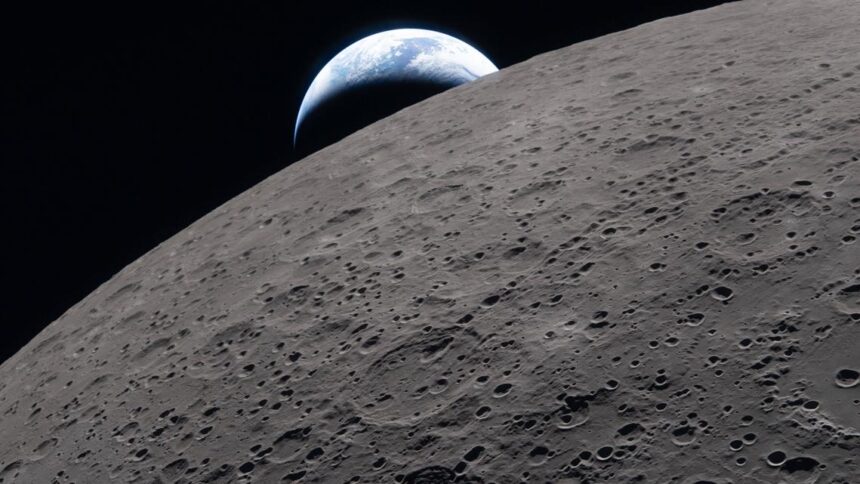
The mission, which carried four astronauts around the Moon and back, depended on continuous global coverage to avoid any loss of contact.
Ground stations, including facilities operated by the South African National Space Agency, maintained near‑constant communication with the spacecraft, handing off signals across continents without interruption.
In Africa, however, climate observation across much of the continent remains far less consistent.
While satellite data from agencies such as NASA is available, national systems often lack the density, integration and maintenance needed for real‑time use.
In many regions, weather stations are sparse or offline, and data is not always accessible quickly enough for operational forecasting.
Research by the European Centre for Medium‑Range Weather Forecasts has quantified the impact of these gaps.
In a series of simulations, ECMWF introduced additional surface, upper‑air and marine observations across countries with limited coverage, including regions in Africa and the Pacific.
The data was modelled as part of an expanded Global Basic Observing Network, a core component of the World Meteorological Organization’s integrated observing system.
The results showed that closing these gaps could reduce forecast errors by up to 30% in Africa and 20% in the Pacific.
“Better forecasts can feed into improved early warning systems and save lives and livelihoods. Global weather and climate models also benefit from this data in parallel, improving forecasts around the world,” said Florian Pappenberger, Director of Forecasts and Services and Deputy Director‑General at ECMWF.
Recent events have highlighted the consequences of limited coverage. Floods in southern Africa in early 2026 killed between 200 and 300 people and affected more than 700,000.
Although meteorological agencies issued warnings, the crisis exposed a wider challenge: an estimated 60% of Africa’s population still lacks access to effective early warning systems.
The African Space Agency has identified fragmentation across national systems as a priority issue. Its plans include linking national space agencies more directly, improving access to satellite‑derived climate data and strengthening ground infrastructure such as weather stations and receiving facilities.
The focus is on making global observation systems usable at national level, rather than relying on delayed external processing.
The contrast remains stark. A spacecraft travelling hundreds of thousands of kilometres from Earth stayed continuously in view through a tightly coordinated global network.
On the ground, where floods, droughts and heat extremes unfold in real time, comparable continuity of observation is still not consistently available across many of the regions most exposed to risk.
OPA News Agency
