
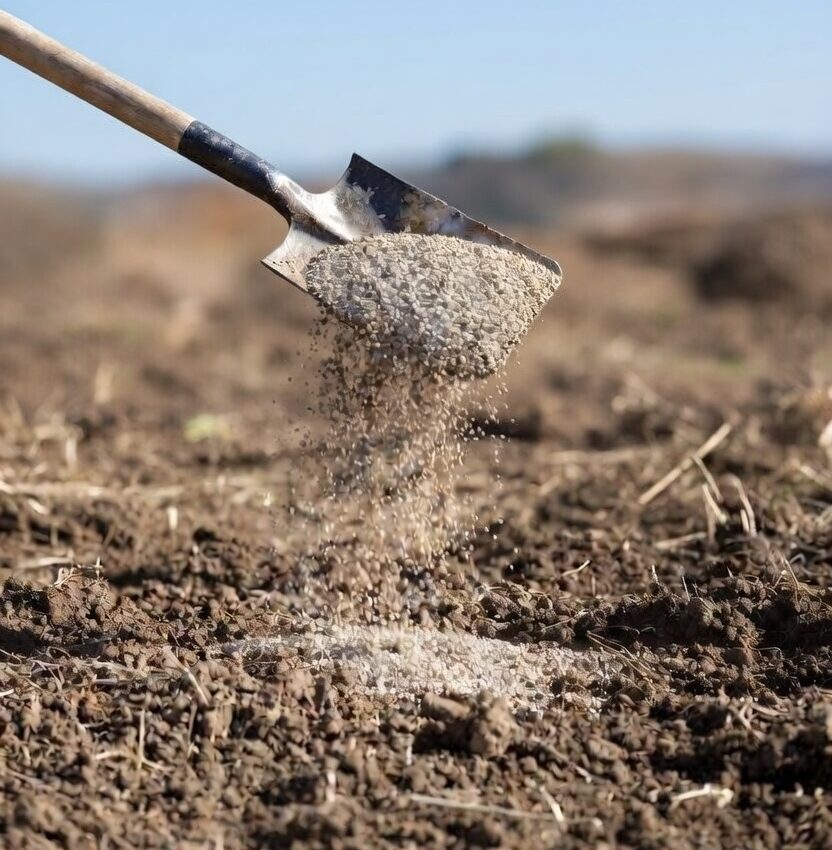
Africa’s planting season is taking its first hits as fertiliser shipments from the Gulf come under fire in the Strait of Hormuz.
Seth Onyango, Opa News Agency
Talk of a wider war in the Gulf is rattling commodity markets, and African countries that depend on imported fertiliser fear a drawn‑out conflict could squeeze supplies as planting season starts.
Already, Africans are paying more at the pump as crude prices rose above US$100 per barrel, but the major concern is fertiliser, where small disruptions quickly feed into higher food costs.
Tanker traffic through the Strait of Hormuz has already slowed, save for a few vessels, as shipping companies reroute or delay cargo in response to missile and drone attacks in the Gulf.
The Gulf supplies a large share of the nitrogen fertiliser used worldwide, and the chemicals needed to produce it rely on steady flows of natural gas.
When shipping slows, prices rise quickly with industry trackers reporting a fresh climb in global urea prices since February, driven by higher freight and insurance costs on routes that pass close to the conflict.
African countries feel these shifts faster than most since many rely almost entirely on imported fertiliser, and the Gulf is a major source.
The slowdown is beginning to resemble the early weeks of the Ukraine war which triggered a significant food security crisis across Africa, exacerbating hunger and malnutrition for millions due to a severe “grain squeeze”.
This time, the pressure is concentrated in a single maritime corridor. Hormuz handles roughly a third of global seaborne fertiliser trade, according to UNCTAD, and the recent interruptions have already pushed up prices for urea, ammonia and sulphur.
UNCTAD’s latest assessment, published on 10 March, shows that roughly one‑third of all seaborne fertiliser trade—nearly 16 million tonnes—moves through the strait, including 67% of global urea shipments and 20% of diammonium phosphate (DAP).
Ecofin Agency notes that this concentration has turned the corridor into a single point of failure for global food production, especially for countries that rely on imported nutrients to maintain yields.
The Guardian has reported that African countries are among the most exposed to this route, with 54% of Sudan’s fertiliser imports, 31% of Tanzania’s, 30% of Somalia’s, 26% of Kenya’s, and 22% of Mozambique’s arriving from the Gulf.
That dependence is now colliding with a slowdown that has already pushed up prices across key markets.
Rabobank told Ecofin that urea prices in North Africa jumped nearly 20% within 48 hours of the first strike against Iran, while European natural gas prices rose about 45% over the same period.
Since natural gas accounts for more than half of nitrogen fertiliser production costs, the price shock is feeding directly into global markets.
China meanwhile, continues to restrict nitrogen exports to protect domestic supply, Belarus remains under EU sanctions affecting potash shipments, and Russia faces tariffs on its fertiliser exports.
With several major suppliers constrained at once, the Gulf disruption over the war in Iran is amplifying pressures that were already building.
Across East Africa, the timing is particularly difficult. Kenya, Tanzania and Ethiopia are entering planting seasons after months of erratic rainfall linked to El Niño, and many farmers are still recovering from reduced harvests.
Importers in Nairobi say they are receiving shorter‑validity offers and higher freight premiums, even for cargoes loaded outside the immediate conflict zone.
Kenya’s subsidy programme, which has been central to efforts to stabilise maize prices, is already under strain, and any sustained rise in global fertiliser prices risks feeding directly into household food budgets.
Ethiopia, which relies heavily on imported fertiliser financed through scarce foreign exchange, faces similar pressures as it tries to rebuild grain reserves after years of conflict and drought.
West African markets are feeling the shock through currency and liquidity channels. Nigeria and Ghana must now secure more expensive fertiliser shipments at a time when foreign‑exchange reserves are under pressure.
Bloomberg reported that Nigeria’s Dangote Group, one of Africa’s few major urea exporters, has seen its order book fill rapidly as global buyers seek alternative suppliers.
“Demand has increased significantly due to the shortage in the global market,” Devakumar Edwin, a vice‑president at Dangote Industries, told the publication on 9 March.
While this offers short‑term gains for Nigerian producers, Ecofin notes that rising prices for ammonia, sulphur and gas could erode margins for African manufacturers that rely on imported inputs.
The Guardian has also highlighted how rising oil and gas prices intensify cost‑of‑living pressures in countries where households spend a large share of income on food.
Analysts at Oxford Economics Africa warn that higher energy and fertiliser costs will feed quickly into food inflation, especially in economies with limited fiscal space.
Many governments entered the year with tight budgets and rising debt‑servicing costs, leaving them with few tools to cushion consumers if global prices continue to rise.
Some governments are trying to get ahead of the disruption with Kenya having secured petroleum shipments through April, while Tanzania has instructed its energy ministry to strengthen strategic reserves.
Others are exploring longer‑term supply contracts with producers in North Africa, Russia and Central Asia to reduce reliance on the Gulf.
The African Development Bank’s US$1.5 billion African Emergency Food Production Facility, created during the 2022 shock, remains one of the few instruments available to help countries finance fertiliser purchases and stabilise supply.
But these measures cannot fully offset a prolonged slowdown in Hormuz. Fertiliser has no global strategic reserve, and shortages can emerge quickly.
For African countries where food absorbs a large share of household income, the risk is unfolding in real time, and the coming months could prove tough for many households.
One Planet Agency

Brilliant piece on the geopolitical fallout from the war on Iran