One Planet AgencyOne Planet AgencyOne Planet Agency
  • Home
  • Climate News
    • Politics
    • Justice
    • Finance
    • Business
    • Nature
    • Science
    • Carbon Markets
    • Explainers
    • Series
    • All news
  • Climate Tech
    • AI and climate
    • Campaigns
    • Companies
    • Innovations
    • Science
    • Training
  • Green Markets
  • People & Voices
    • Interviews
    • Opinion
    • Women
    • Guest Writers
  • Energy
  • Deep Dives
    • Investigate
    • Expert Opinion
    • Analysis
  • Multimedia
    • Pictures
    • Videos
    • Podcast
Reading: Space, Science, and Krill: A New Approach to Marine Protection
Share
Notification Show More
Font ResizerAa
Font ResizerAa
One Planet AgencyOne Planet Agency
  • Home
  • Climate News
  • Climate Tech
  • Green Markets
  • People & Voices
  • Energy
  • Deep Dives
  • Multimedia
  • Home
  • Climate News
    • Politics
    • Justice
    • Finance
    • Business
    • Nature
    • Science
    • Carbon Markets
    • Explainers
    • Series
    • All news
  • Climate Tech
    • AI and climate
    • Campaigns
    • Companies
    • Innovations
    • Science
    • Training
  • Green Markets
  • People & Voices
    • Interviews
    • Opinion
    • Women
    • Guest Writers
  • Energy
  • Deep Dives
    • Investigate
    • Expert Opinion
    • Analysis
  • Multimedia
    • Pictures
    • Videos
    • Podcast
Have an existing account? Sign In
Follow US
One Planet Agency > Blog > Oceans > Space, Science, and Krill: A New Approach to Marine Protection
Oceans

Space, Science, and Krill: A New Approach to Marine Protection

By Victor Okeyo Last updated: February 13, 2025 4 Min Read
Share
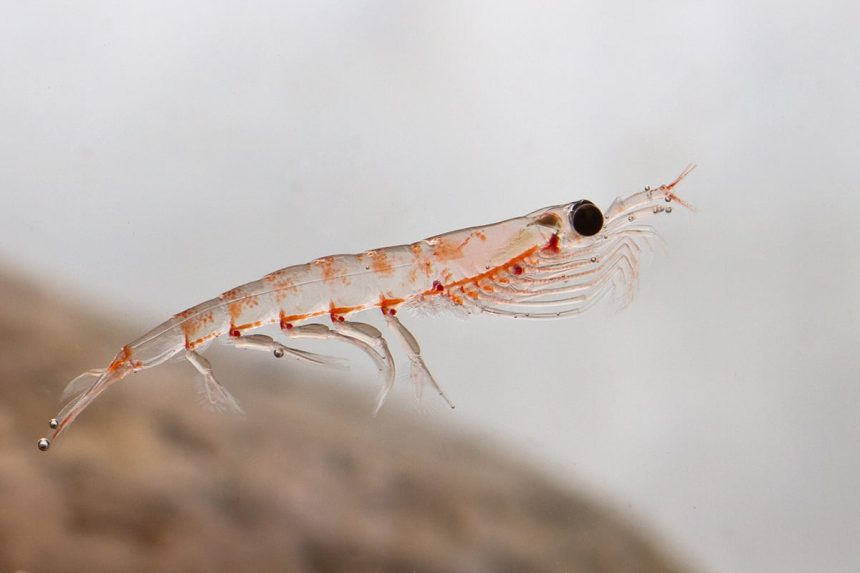
krill

Antarctic krill daily transfers 0.3 million tons of carbon to the deep ocean, which is equal to the United Kingdom’s daily CO2 emissions, yet they face growing threats.

To inform decision-makers and ultimately safeguard one of the planet’s most vital yet overlooked species, the World Wildlife Fund (WWF), the University of Strathclyde, and the British Antarctic Survey (BAS) have joined forces to determine whether we can monitor Antarctic krill from space via satellites.

Krill is considered the ‘Superheroes of the Southern Ocean,” a foundation for marine food webs above the seabed, sustaining penguins, seals, and the world’s largest animals, including blue whales. Additionally, the creature that may be no bigger than your little finger, but collectively they are a powerhouse, transfer carbon to the deep ocean by eating and excreting phytoplankton and by regularly shedding their exoskeletons.

The Krill from Space project uses a method to compare light patterns, combined with current and historical satellite and remote sensing data, to better understand the distribution and population of krill across time and space. Ocean color satellites have provided daily global monitoring of the world ocean since 1997.

However, scientists recently made a breakthrough by being able to identify a signal associated with the pigment that turns krill red, and Dr Cait McCarry from Strathclyde recently returned from an expedition to Antarctica where she was sampling live krill.   

Despite their importance in the ocean ecosystem, as sea temperatures rise and krill nurseries lose their protective sea ice, essential for krill nurseries, their populations are shrinking and shifting south.
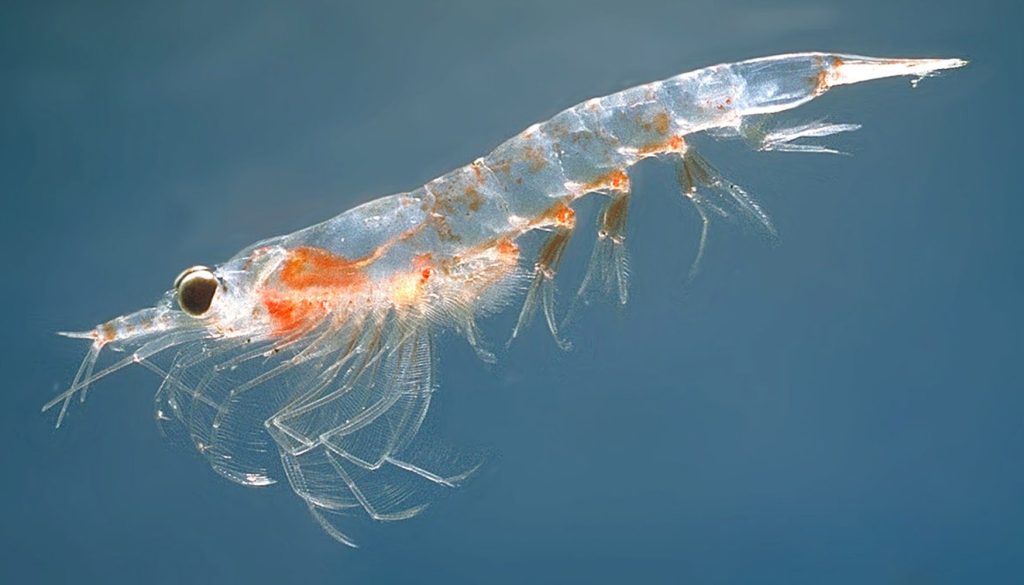
krill
Image of a Krill image courtesy Wikipedia

Rod Downie, chief polar advisor at WWF-UK said, “They are the reason why humpback whales migrate thousands of miles every year to feed in the icy waters around Antarctica. And play a critical role in drawing down carbon from the ocean’s surface.” 

He further highlighted that climate change and unsustainable fishing are putting them at risk. “With sea ice declining and industrial fishing growing, we urgently need to manage the fishery better and protect krill habitats within a network of marine protected areas. ‘Krill from Space’ may give us a new tool to help monitor and safeguard this vital species.” 

The ‘Krill from Space’ project has the potential to shape global conservation policies by providing real-time data on krill populations. Introduced at COP26 in Baku, the initiative could support efforts to regulate krill fishing, enforce sustainable practices, and push for Marine Protected Areas (MPAs) in the Southern Ocean.

With industrial fishing and climate change threatening krill habitats, policymakers can use this technology to track population shifts and strengthen conservation efforts.

Additionally, recognizing krill’s role in carbon sequestration could lead to new climate finance mechanisms that integrate ocean protection into carbon offset strategies, ensuring long-term sustainability for marine ecosystems.

TAGGED: British Antarctic Survey, Krill, Marine Protected Areas, MPAs, World Wildlife Fund, WWF

Sign Up For Daily Newsletter

Be keep up! Get the latest breaking news delivered straight to your inbox.

By signing up, you agree to our Terms of Use and acknowledge the data practices in our Privacy Policy. You may unsubscribe at any time.
Victor Okeyo February 13, 2025 February 13, 2025
Share This Article
Facebook Twitter Email Copy Link Print
What do you think?
Love0
Sad0
Happy0
Sleepy0
Angry0
Dead0
Wink0
Leave a comment Leave a comment

Leave a Reply Cancel reply

Your email address will not be published. Required fields are marked *

YOU MAY ALSO LIKE

South Africa’s deepwater oil ambitions face fresh legal challenge

A High Court challenge has thrown a spanner in South Africa’s deepwater oil push and raised the stakes for climate…

Climate JusticeClimate NewsJusticeNewsOceans
March 25, 2026

Can Artificial Intelligence Save Coral Reefs?

Coral reefs are dying at an alarming rate due to climate change impacts across the world hence a need to…

Oceans
February 18, 2025

Only 13 Countries Submit New NDCs by Deadline

Under the Paris Agreement, all countries are required to update their NDCs every five years outlining national strategies to reduce…

Electric VehiclesEnergyEnergy
January 21, 2026

Regional Cooperation for Climate Action: What Africa Can Learn from the Pacific SIDS Model

They brought to the global stage the importance of knowledge sharing across the Pacific for SIDS grappling with climate finance…

ClimateOceans
February 4, 2025
We use our own and third-party cookies to improve our services, personalise your advertising and remember your preferences.
  • My Bookmark
  • Interests
  • Contact Us
  • Blog Index
  • Complaint
  • Advertise
  • Exclusives
  • Learn How
  • Support
  • Solutions
  • About Us
  • Terms And Conditions
  • Editorial Policy
  • Marketing Solutions
  • Industry Intelligence

Follow US: 

© 2025 One Planet Agency.  All rights reserved.

© 2025. All Rights Reserved. One Planet Agency
adbanner
AdBlock Detected
Our site is an advertising supported site. Please whitelist to support our site.
Okay, I'll Whitelist
Welcome Back!

Sign in to your account

Register Lost your password?