

Researchers say crop and forest waste could help African farmers restore soils, boost yields and lock away carbon, offering a low-cost, scalable solution to land degradation and climate pressures.
By Conrad Onyango, One Planet Agency
A new scientific review is positioning biochar, a carbon-rich material made from agricultural waste, as a promising solution to land degradation and food insecurity challenges facing many African countries and other dryland regions.
In a study published in the journal Biochar, researchers said the substance, produced by heating crop residues and organic waste in low-oxygen conditions, could help restore depleted soils, improve crop yields and build resilience against climate change in arid and semi-arid areas that dominate much of Africa’s landscape.
“Biochar provides a powerful, nature-based solution that can simultaneously improve soil health, enhance water retention, and support sustainable agriculture in drylands,” the authors note, pointing to its potential for large-scale climate adaptation.
A number of reports show Africa’s vast agricultural and forestry sectors generate an estimated 1.4 billion tonnes of biomass annually, presenting a largely untapped opportunity for sustainable biochar production at scale.
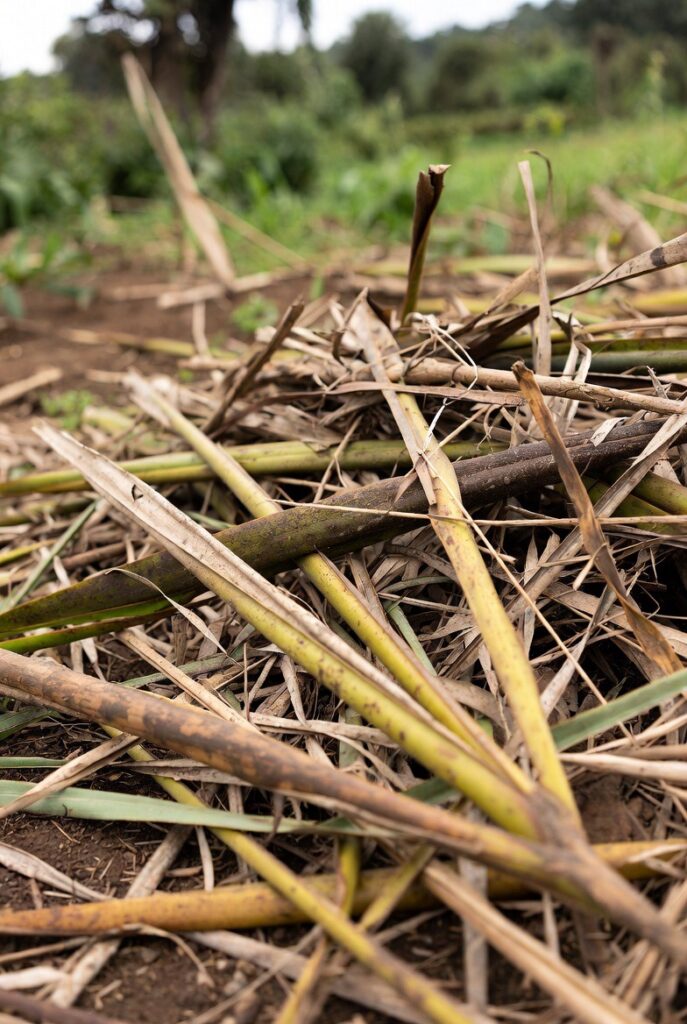
This abundant feedstock—including crop residues such as maize cobs, rice husks and sugarcane bagasse, as well as nut shells and forestry waste—is widely available but often underutilised. In many areas, it is left to decompose or openly burned, releasing carbon back into the atmosphere and contributing to air pollution.
Drylands cover nearly 40 percent of the world’s land surface, including vast stretches across Africa, where farmers are grappling with erratic rainfall, declining soil fertility and advancing desertification.
Conventional interventions such as heavy fertiliser use or irrigation have often delivered only short-term gains, sometimes worsening soil degradation over time.
The new study finds that biochar can improve soil water retention by between 15 and 35 percent, while boosting beneficial soil microorganisms by up to 50 percent. Its porous structure helps soils hold onto moisture for longer, a critical advantage for farmers in water-scarce regions.
According to experts, this is particularly relevant for African soils, which are often low in organic matter and highly vulnerable to erosion. By improving soil structure and reducing water loss, biochar can enhance soil stability and support healthier crop growth.
Evidence from field studies reviewed in the paper shows that applying biochar can increase crop yields and significantly improve vegetation growth in degraded landscapes, with biomass rising by as much as 30 to 50 percent in some cases.
Researchers found biochar has a stable carbon composition that allows it to lock carbon into soils for decades or even centuries, offering a potential pathway for reducing greenhouse gas emissions while restoring ecosystems.
Combining biochar with compost to produce nutrient-rich fertilisers, using drones for precision application, and integrating production with renewable energy systems such as solar-powered processing units have been cited as innovative ways to accelerate its adoption.
Currently, there is low adoption of biochar across the continent because most farmers lack knowledge on how to prepare it, what raw materials to use and how it interacts with local soils.
Researchers warned that if not properly prepared, biochar can in some cases reduce nutrient availability or worsen soil salinity, limiting its benefits for farmers.
Biochar production can also be expensive, with the collection, transport and processing of raw materials driving up costs. This puts it out of reach for many smallholder farmers, raising concerns about how quickly the technology can be adopted at scale without targeted support.
The authors called for stronger collaboration between governments, researchers and the private sector to develop affordable production models and tailor solutions to local conditions.
OPA News
