One Planet AgencyOne Planet AgencyOne Planet Agency
  • Home
  • Climate News
    • Politics
    • Justice
    • Finance
    • Business
    • Nature
    • Science
    • Carbon Markets
    • Explainers
    • Series
    • All news
  • Climate Tech
    • AI and climate
    • Campaigns
    • Companies
    • Innovations
    • Science
    • Training
  • Green Markets
  • People & Voices
    • Interviews
    • Opinion
    • Women
    • Guest Writers
  • Energy
  • Deep Dives
    • Investigate
    • Expert Opinion
    • Analysis
  • Multimedia
    • Pictures
    • Videos
    • Podcast
Reading: Lagos floods test Nigeria’s climate preparedness
Share
Notification Show More
Font ResizerAa
Font ResizerAa
One Planet AgencyOne Planet Agency
  • Home
  • Climate News
  • Climate Tech
  • Green Markets
  • People & Voices
  • Energy
  • Deep Dives
  • Multimedia
  • Home
  • Climate News
    • Politics
    • Justice
    • Finance
    • Business
    • Nature
    • Science
    • Carbon Markets
    • Explainers
    • Series
    • All news
  • Climate Tech
    • AI and climate
    • Campaigns
    • Companies
    • Innovations
    • Science
    • Training
  • Green Markets
  • People & Voices
    • Interviews
    • Opinion
    • Women
    • Guest Writers
  • Energy
  • Deep Dives
    • Investigate
    • Expert Opinion
    • Analysis
  • Multimedia
    • Pictures
    • Videos
    • Podcast
Have an existing account? Sign In
Follow US
One Planet Agency > Blog > Climate News > Lagos floods test Nigeria’s climate preparedness
Climate News

Lagos floods test Nigeria’s climate preparedness

By Nympha Ozougwu Last updated: July 1, 2026 3 Min Read
Share
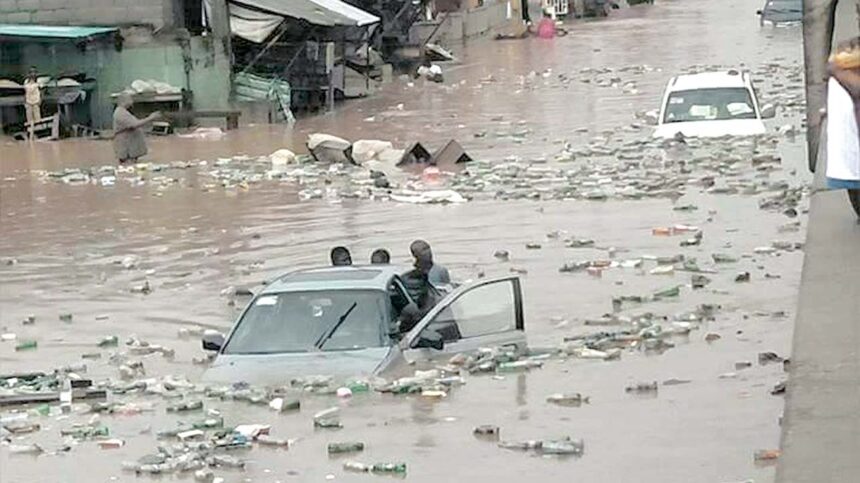
Lagos floods: Photo @ The Guardian Nigeria


Nigeria’s predicted flood season has barely begun, yet one day of heavy rain was enough to inundate parts of Lagos and disrupt operations at a terminal of the country’s busiest international airport.

Nympha Ozougwu, OPA News Agency

Floodwaters have recently submerged roads across several parts of Lagos, stranding commuters, disrupting businesses and worsening traffic across Nigeria’s commercial capital. The flooding came weeks after the Nigerian Meteorological Agency, the Nigeria Hydrological Services Agency and the Lagos State Government warned that the state faced heightened flood risks as the rainy season intensified.

The disruption extended to the international terminal at Murtala Muhammed International Airport, where floodwater reached the terminal’s powerhouse. 

The Federal Airports Authority of Nigeria temporarily suspended operations at the terminal and relocated affected international airlines while engineers restored power. The authority later said no flights were cancelled and operations resumed after the flooding subsided.

The incident unfolded within the period identified by Nigeria’s weather and hydrological agencies as one of heightened flood risk.

In its 2026 Seasonal Climate Prediction, released in February, the meteorological agency forecast a longer than normal rainy season for Lagos and advised governments, emergency managers and other sectors to use climate information to strengthen preparedness and reduce weather-related risks. 

The warning was reinforced by the hydrological agency’s 2026 Annual Flood Outlook, which listed Lagos among the states facing significant flood risk and projected that flood hazards would intensify between July and September. The outlook is published annually to guide preparedness before peak flooding begins.

Ahead of the rains, the Lagos State Government also warned residents in flood-prone communities, including Eti-Osa, Apapa, Ikeja, Ikorodu, Lekki, Lagos Island and Surulere, to prepare for heavy rainfall, flash floods and rising water levels. 

During the state’s seasonal climate briefing, the Commissioner for Environment and Water Resources, Tokunbo Wahab, said the rainfall outlook pointed to an early onset of the rainy season, a longer than normal duration and a delayed end. He warned that flooding could disrupt commercial activities and cause flight delays.

Following the latest flooding, state officials attributed the incident to persistent rainfall, saturated soil, high lagoon levels and overwhelmed drainage channels. 

They also said illegal construction on wetlands and natural waterways continues to increase the city’s flood vulnerability despite ongoing disaster risk reduction and enforcement efforts.

With July marking the start of Nigeria’s highest flood-risk period, the hydrological agency expects flood risks to intensify through September, making the Lagos floods one of the earliest high-profile tests of the country’s flood preparedness efforts this year.

One Planet Agency 

Sign Up For Daily Newsletter

Be keep up! Get the latest breaking news delivered straight to your inbox.

By signing up, you agree to our Terms of Use and acknowledge the data practices in our Privacy Policy. You may unsubscribe at any time.
Nympha Ozougwu July 1, 2026 July 1, 2026
Share This Article
Facebook Twitter Email Copy Link Print
What do you think?
Love0
Sad0
Happy0
Sleepy0
Angry0
Dead0
Wink0
Leave a comment Leave a comment

Leave a Reply Cancel reply

Your email address will not be published. Required fields are marked *

YOU MAY ALSO LIKE

Even the greenest countries fall short of net‑zero targets, new index shows

Estonia leads a table dominated by European countries, but researchers say even top performers are falling short of net-zero timelines.…

ClimateClimate NewsEnvironment
July 23, 2026

Africa’s great green wall has become a $33 billion test of climate ambition

Nearly two decades after the African Union launched one of the world's most ambitious land restoration schemes, the Great Green…

AfricaClimate NewsEnvironment
July 9, 2026

Africa faces rising fiscal strain as fossil fuel dependence deepens market exposure

Studies point to growing economic risk for African states tied to fossil fuels. Seth Onyango, OPA News Agency African governments…

AfricaClimate NewsEnergy
June 24, 2026

Climate ‘sunshade’ may fail to protect large parts of the world’s oceans

Efforts to cool the planet with sunlightreflecting technologies may not shield much of the world’s oceans from dangerous heat, according…

Climate NewsOceans
June 22, 2026
We use our own and third-party cookies to improve our services, personalise your advertising and remember your preferences.
  • My Bookmark
  • Interests
  • Contact Us
  • Blog Index
  • Complaint
  • Advertise
  • Exclusives
  • Learn How
  • Support
  • Solutions
  • About Us
  • Terms And Conditions
  • Editorial Policy
  • Marketing Solutions
  • Industry Intelligence

Follow US: 

© 2025 One Planet Agency.  All rights reserved.

© 2025. All Rights Reserved. One Planet Agency
adbanner
AdBlock Detected
Our site is an advertising supported site. Please whitelist to support our site.
Okay, I'll Whitelist
Welcome Back!

Sign in to your account

Register Lost your password?