
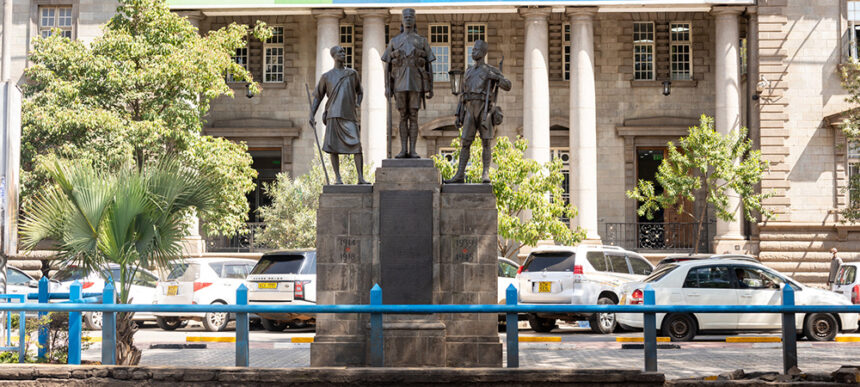
The history of the First and Second World Wars in Kenya has long remained fragmented in public memory, despite the country’s deep involvement in both conflicts. While war cemeteries and memorials exist across the landscape, many communities have little awareness of their origins or the African lives they represent. The Commonwealth War Graves Commission (CWGC) is working to change this through education, community engagement, and heritage preservation initiatives that bring forgotten histories back into public view.
Bringing a Hidden History Back Into Focus
In many parts of Kenya, the world wars are still perceived as distant European events rather than conflicts that shaped local communities. Yet thousands of Africans served as soldiers, porters, and labourers, with many never returning home.
CWGC’s outreach programmes begin by reconnecting people with names and stories that may belong to their own families. Through archival searches and public engagement, individuals are often able to trace relatives who participated in the wars—sometimes uncovering histories that had been lost for generations.
Learning Through Experience at War Cemeteries
Education is central to CWGC’s mission, with school engagement forming one of its most impactful approaches. Education Officer Rose Maina leads many of these programmes, using storytelling and guided exploration to make history accessible to young learners.
A key site for these learning experiences is the Nairobi War Cemetery, where students are welcomed for structured educational visits. For many schools, particularly those with limited resources, these visits offer a rare opportunity to learn history in a real-world setting.
Initially, some teachers express concern about conducting lessons in a cemetery. However, once they experience the structured and respectful learning environment, the site becomes a powerful classroom for history, ethics, and reflection.
Understanding the Human Stories Behind War
CWGC’s education programmes focus not only on military events but also on the human experiences behind them. Students learn about the role of East Africa during the world wars, the recruitment of African soldiers and carriers, and the conditions they faced.
These lessons help learners understand the scale of African involvement and the personal sacrifices made by individuals and families. The narrative goes beyond battles and dates, highlighting the emotional and social impact of war on communities.
A key takeaway is that while wars may end on paper, their consequences continue across generations through loss, memory, and lived experience.
Transforming Cemeteries Into Public Heritage Spaces
Many CWGC sites in Kenya were once viewed as inaccessible or foreign spaces. Today, the Commission is actively working to reposition them as shared heritage sites open to all communities.
Through public tours, heritage trails, guide training, and community events, these spaces are being reintroduced as places of learning and remembrance. Visitors gain insight into the historical context of the cemeteries and the individuals buried within them.
This approach is helping shift perception—turning once-overlooked sites into meaningful parts of Kenya’s cultural and historical landscape.
Addressing Historical Inequality in Remembrance
A significant part of CWGC’s work involves acknowledging historical gaps in recognition. The Nairobi African Memorial serves as a reminder that many African soldiers were commemorated collectively, without individual names, during and after the wars.
CWGC has been transparent about this legacy and continues efforts to restore identity wherever possible through research and archival recovery. This work is essential in ensuring that remembrance is more inclusive and accurate.
Preserving Memory for the Future
CWGC’s initiatives in Kenya are steadily reshaping how history is understood and remembered. Through education programmes, public engagement, and heritage preservation, communities are beginning to reclaim a chapter of history that had long been overlooked.
For educators like Rose Maina, the mission is rooted in dignity and connection—ensuring that African soldiers are remembered not as anonymous figures of history, but as individuals with names, families, and stories.
Ultimately, the CWGC’s work is helping Kenya reconnect with its past in a more complete and meaningful way, ensuring that the sacrifices of its people during global conflict are never forgotten.
