
That could put pressure on countries already dealing with food shortages, conflict and weak public finances.
Alida Ban Pavlovic, bird story agency
Africa could lose between $10 billion and $20 billion from an unusually strong El Niño expected to develop later this year, with climate shocks threatening crops, infrastructure and livelihoods across parts of the continent.
Anthony Nyong, the African Development Bank’s director for climate change and green growth, told Reuters that economies hit hardest could lose between 1% and 2% of their gross domestic product.
“Just this event is going to reduce heavily affected countries’ GDP by 1% to 2% on average, which is about $10 billion to $20 billion across the continent,” Nyong said.
The forecast is not yet certain. El Niño conditions are already present in the Pacific, and the US National Oceanic and Atmospheric Administration gives a 63% chance of the event becoming very strong between November and January. Such an event would rank among the largest recorded since modern records began in 1950.
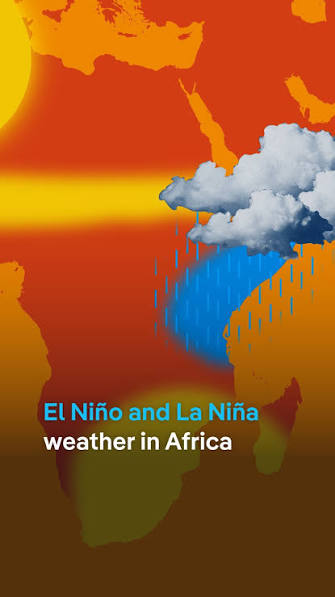
The warming of the Pacific Ocean can alter rainfall and temperature patterns far beyond the region. In Africa, El Niño is generally associated with drier conditions in southern Africa and wetter conditions in parts of East Africa, although the effects vary by location and season.
That could put pressure on countries already dealing with food shortages, conflict and weak public finances.
The African Development Bank identified Sudan, South Sudan, the Democratic Republic of Congo, Somalia, Mali, Burundi and Nigeria among countries that could face particularly severe effects.
Nyong warned that the economic damage could extend beyond a single harvest or financial year. Governments may have to divert money from health, education and infrastructure to deal with floods, drought and damaged roads and power systems.
This could deepen what he described as a “climate finance trap”, in which countries with limited financial resources are forced to borrow or redirect existing budgets after climate disasters.
The warning comes after a difficult 2023 to 2024 El Niño for much of Africa.
Southern Africa suffered one of its worst droughts in decades. Zambia and Zimbabwe recorded sharp falls in cereal production, while low water levels at Lake Kariba reduced hydropower generation and contributed to prolonged power shortages. The World Meteorological Organization said aggregate cereal yields in southern Africa were 16% below the five year average during the period.
East Africa experienced the opposite problem in parts of the region, with exceptionally heavy rains between March and May 2024 causing severe flooding in Kenya, Tanzania and Burundi. More than 700,000 people were affected, according to the WMO.
The next event could again expose the different vulnerabilities across the continent.
For farmers, the immediate concern is rainfall. Drought can destroy crops and livestock, while flooding can wash away fields, damage roads and disrupt markets. Higher temperatures can also reduce yields and increase pressure on water supplies.
Fishing communities face another risk as warmer seas and stronger storms threaten catches and coastal infrastructure.
The potential food shock comes as millions of people are already struggling with hunger. The UN Food and Agriculture Organization and World Food Programme warned in June that a strong El Niño could increase the risk of drought, floods and storms across parts of Africa and other vulnerable regions. They launched a $202 million appeal aimed at protecting 8.8 million people in 22 high risk countries.
The two agencies said they could already support 1.2 million people with anticipatory action, but need another $167 million to extend assistance to a further 7.6 million people.
The risks are not limited to Africa.
Strong El Niño conditions can bring drought to parts of Asia while increasing rainfall and flooding risks in parts of Latin America and the Caribbean. The global effects can also feed into food and commodity prices when major producing regions suffer simultaneous crop losses.
For African governments, the warning is therefore as much about preparation as the weather itself.
Nyong said African countries may need as much as $100 billion in climate adaptation finance over the next year as governments prepare for the expected shocks.
“Proactive investment in resilience is much cheaper than responding to disasters after they happen,” he told Reuters.
With conflict and debt already limiting the ability of some governments to respond to emergencies, a severe El Niño could turn a weather event into a wider economic and humanitarian crisis.
The scale of the damage will depend on how strong the event becomes, where rainfall shifts occur and how quickly governments and aid agencies act. NOAA says stronger El Niño events increase the likelihood of expected climate effects, but do not guarantee the same outcome everywhere.
OPA News Agency
