One Planet AgencyOne Planet AgencyOne Planet Agency
  • Home
  • Climate News
    • Politics
    • Justice
    • Finance
    • Business
    • Nature
    • Science
    • Carbon Markets
    • Explainers
    • Series
    • All news
  • Climate Tech
    • AI and climate
    • Campaigns
    • Companies
    • Innovations
    • Science
    • Training
  • Green Markets
  • People & Voices
    • Interviews
    • Opinion
    • Women
    • Guest Writers
  • Energy
  • Deep Dives
    • Investigate
    • Expert Opinion
    • Analysis
  • Youth Training
  • Multimedia
    • Pictures
    • Videos
    • Podcast
Reading: COP31 confronts the $53 billion cost of failing to fund rural women
Share
Notification Show More
Font ResizerAa
Font ResizerAa
One Planet AgencyOne Planet Agency
  • Home
  • Climate News
  • Climate Tech
  • Green Markets
  • People & Voices
  • Energy
  • Deep Dives
  • Youth Training
  • Multimedia
  • Home
  • Climate News
    • Politics
    • Justice
    • Finance
    • Business
    • Nature
    • Science
    • Carbon Markets
    • Explainers
    • Series
    • All news
  • Climate Tech
    • AI and climate
    • Campaigns
    • Companies
    • Innovations
    • Science
    • Training
  • Green Markets
  • People & Voices
    • Interviews
    • Opinion
    • Women
    • Guest Writers
  • Energy
  • Deep Dives
    • Investigate
    • Expert Opinion
    • Analysis
  • Youth Training
  • Multimedia
    • Pictures
    • Videos
    • Podcast
Have an existing account? Sign In
Follow US
One Planet Agency > Blog > Uncategorized > Climate Finance > COP31 confronts the $53 billion cost of failing to fund rural women
Climate FinanceClimate NewsCOP 31

COP31 confronts the $53 billion cost of failing to fund rural women

By Nympha Ozougwu Last updated: November 13, 2026 4 Min Read
Share

Billions of dollars in additional climate-related losses are widening the economic gap between rural women and men, as unequal access to finance leaves women less equipped to recover and adapt.

By Nympha Ozougwu, One Planet Agency

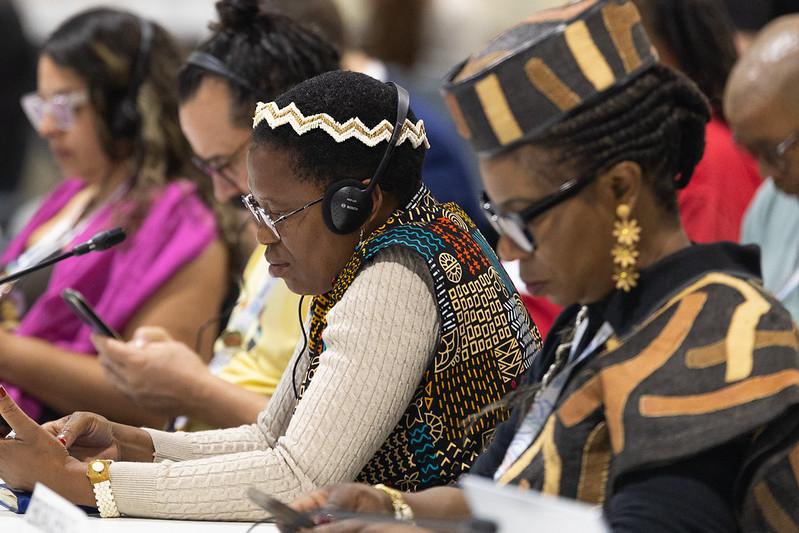
Rural women in 24 low and middle income countries, including Nigeria, Ghana, Ethiopia, Malawi, Uganda and Tanzania, lose an estimated $53 billion more annually to extreme heat and flooding than their male counterparts, as a new report launched at COP31 exposes the limited financing directed towards strengthening women’s resilience to climate change.

The findings released by the International Fund for Agricultural Development and Türkiye’s Ministry of Agriculture and Forestry reveal a disconnect between global commitments to gender equality and the actual distribution of climate finance.

The report, The Unfunded Half: Financing Rural Women’s Resilience, finds that although 80% of international public climate finance for agri-food systems considers gender equality, only 3% has gender equality as its primary objective.

Africa relies heavily on women’s labour in food production and local economies, yet its financial systems continue to keep them locked out of the financial resources needed to adapt, largely because of structural barriers including limited land ownership, inadequate collateral and restricted access to formal credit.

The funding gap is compounded by a lack of transparency. Domestic budgets and private investors provide about three-quarters of climate finance for agri-food systems, according to the report, but fail to report comparable data on gender. How much of that money reaches rural women remains unclear.

“Domestic budgets and private investors, which provide three-quarters of the total, report nothing on gender,” the report states.

Speaking at the launch, IFAD President Alvaro Lario said: “Investing in rural women is investing in the productivity, food security and resilience of entire economies. Yet, unequal access to finance, assets and services limits their opportunities and leaves them disproportionately exposed to climate and economic shocks.”

Lario called for financial instruments, including adaptation bonds, matching grants, guarantees and insurance, to be designed around the barriers rural women face in accessing capital.

Alongside the report, IFAD announced a $70 million rural climate adaptation bond, purchased through a private placement by Japan’s National Mutual Insurance Federation of Agricultural Cooperatives.

Described by IFAD as the first global adaptation bond exclusively focused on rural communities, the instrument brings institutional investment onto the organization’s AA+ balance sheet. IFAD says the resulting lending will operate under its gender targets, with annual monitoring of project results and reporting on the women and men reached.

Building climate-resilient agriculture could remain an incomplete ambition if those who sustain much of its production lack the financial means to adapt.

The bond is one attempt to address a financing gap that has persisted despite years of commitments to gender-responsive climate action.

Whether it signals a change in how climate finance is allocated, however, will depend on the distribution of capital and the opportunities it creates for women to acquire productive assets, expand their enterprises and protect their livelihoods.

Sign Up For Daily Newsletter

Be keep up! Get the latest breaking news delivered straight to your inbox.

By signing up, you agree to our Terms of Use and acknowledge the data practices in our Privacy Policy. You may unsubscribe at any time.
Nympha Ozougwu November 13, 2026 November 13, 2026
Share This Article
Facebook Twitter Email Copy Link Print
What do you think?
Love0
Sad0
Happy0
Sleepy0
Angry0
Dead0
Wink0
Leave a comment Leave a comment

Leave a Reply Cancel reply

Your email address will not be published. Required fields are marked *

YOU MAY ALSO LIKE

COP31 makes history with 92,934 registered participants, surpassing previous climate summit record

Antalya's climate summit has drawn an unprecedented crowd, with Nigeria ranking third among national delegations as nearly 100,000 participants converge…

ClimateClimate NewsCOP 31
November 13, 2026

COP31’s $156 Billion Energy Push Raises Stakes for Global Electrification

Climate campaigners are rallying behind a new target to increase electricity’s share of energy consumption from 23% to 35% by…

Climate FinanceClimate NewsCOP 31
November 10, 2026

Africa makes fastest resilience gains but disaster warnings leave millions behind

Africa’s gains show progress, but the warning gaps underline how much protection still depends on whether people can respond before…

ClimateClimate News
November 3, 2026

Climate change could redraw West Africa’s migration map

Climate change could reshape where millions of people live and work across West Africa over the next three decades. Climate…

AfricaClimate News
September 15, 2026
We use our own and third-party cookies to improve our services, personalise your advertising and remember your preferences.
  • My Bookmark
  • Interests
  • Contact Us
  • Blog Index
  • Complaint
  • Advertise
  • Exclusives
  • Learn How
  • Support
  • Solutions
  • About Us
  • Terms And Conditions
  • Editorial Policy
  • Marketing Solutions
  • Industry Intelligence

Follow US: 

© 2025 One Planet Agency.  All rights reserved.

© 2025. All Rights Reserved. One Planet Agency
imunify-bot-check
adbanner
AdBlock Detected
Our site is an advertising supported site. Please whitelist to support our site.
Okay, I'll Whitelist
Welcome Back!

Sign in to your account

Register Lost your password?