One Planet AgencyOne Planet AgencyOne Planet Agency
  • Home
  • Climate News
    • Politics
    • Justice
    • Finance
    • Business
    • Nature
    • Science
    • Carbon Markets
    • Explainers
    • Series
    • All news
  • Climate Tech
    • AI and climate
    • Campaigns
    • Companies
    • Innovations
    • Science
    • Training
  • Green Markets
  • People & Voices
    • Interviews
    • Opinion
    • Women
    • Guest Writers
  • Energy
  • Deep Dives
    • Investigate
    • Expert Opinion
    • Analysis
  • Multimedia
    • Pictures
    • Videos
    • Podcast
Reading: Report Shows Climate Needs for Vulnerable Countries to Climb To $490bn by 2030
Share
Notification Show More
Font ResizerAa
Font ResizerAa
One Planet AgencyOne Planet Agency
  • Home
  • Climate News
  • Climate Tech
  • Green Markets
  • People & Voices
  • Energy
  • Deep Dives
  • Multimedia
  • Home
  • Climate News
    • Politics
    • Justice
    • Finance
    • Business
    • Nature
    • Science
    • Carbon Markets
    • Explainers
    • Series
    • All news
  • Climate Tech
    • AI and climate
    • Campaigns
    • Companies
    • Innovations
    • Science
    • Training
  • Green Markets
  • People & Voices
    • Interviews
    • Opinion
    • Women
    • Guest Writers
  • Energy
  • Deep Dives
    • Investigate
    • Expert Opinion
    • Analysis
  • Multimedia
    • Pictures
    • Videos
    • Podcast
Have an existing account? Sign In
Follow US
One Planet Agency > Blog > Electric Vehicles > Report Shows Climate Needs for Vulnerable Countries to Climb To $490bn by 2030
Electric VehiclesEnergyEnergy

Report Shows Climate Needs for Vulnerable Countries to Climb To $490bn by 2030

By Victor Okeyo Last updated: January 21, 2026 4 Min Read
Share
climate finance

During COP29, countries resolved to contribute $300bn annually by 2035 in climate finance to help with mitigation, adaptation, and resilience needs. However, new research has revealed that the climate finance needs of vulnerable countries are likely to exceed $490bn annually by 2030.

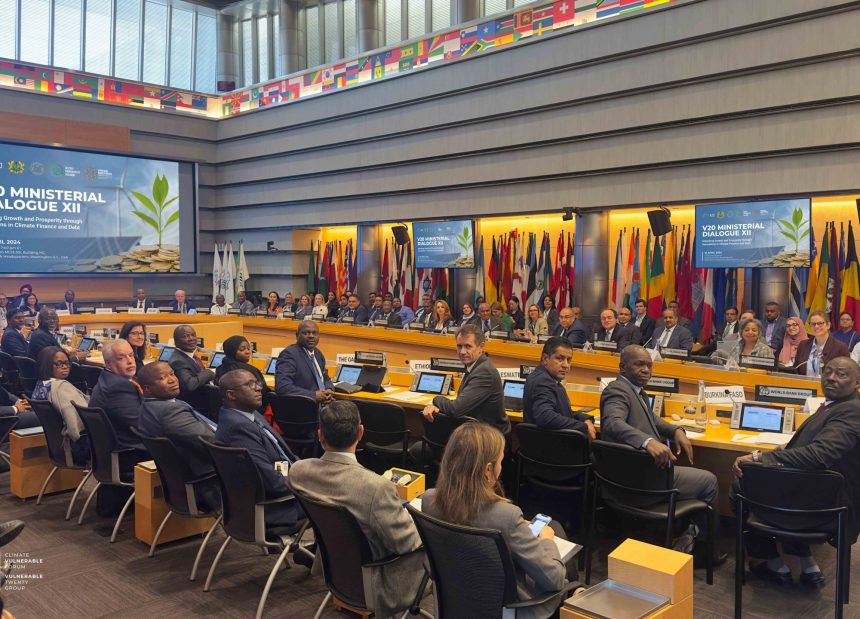
The report released by the Climate Vulnerable Forum (CVF), the Vulnerable 20 Group of Finance Ministers (V20), and the Bridgetown initiative, shows that the financial needs of developing nations already impacted by climate change will worsen over the coming years.

Further, the report that covered 70 vulnerable nations’ need for $490bn annually for decarbonization, nature conservation and restoration, and loss and damage, shows that the needs for all nations could reach$2.4trn. Consequently, the commitment made at COP29 for the provision of $300bn in climate finance will be inefficient.

However, the funding commitment made in COP29, is accosted by several issues, the key of which is the uncertainty around the proportion of this funding that will be allocated as grants, with wealthier nations yet to make a decision.

Developing nations are concerned that loans, instead of grants, could add to the debt burdens of low-income countries, worsening their economic difficulties rather than offering the immediate assistance required to strengthen climate resilience.

The report highlights that V20 nations, among the most climate-vulnerable countries, have already begun implementing Climate Prosperity Plans (CPPs) as part of their national strategies. These plans seek to promote economic growth while addressing emissions reduction and climate resilience. However, without sufficient financial support, they risk failing to achieve their intended goals.

Mohamed Nasheed, Secretary General of the CVF, stated that vulnerable nations are burdened by debt and high capital costs, often spending more on interest payments than on essential services like health and education.

“As a result, there is little financial capacity to invest in adaptation and resilience, even though such investments are crucial for helping communities recover more swiftly in a world increasingly affected by climate change,” he added.
climate finance

Levers to mobilize climate finance

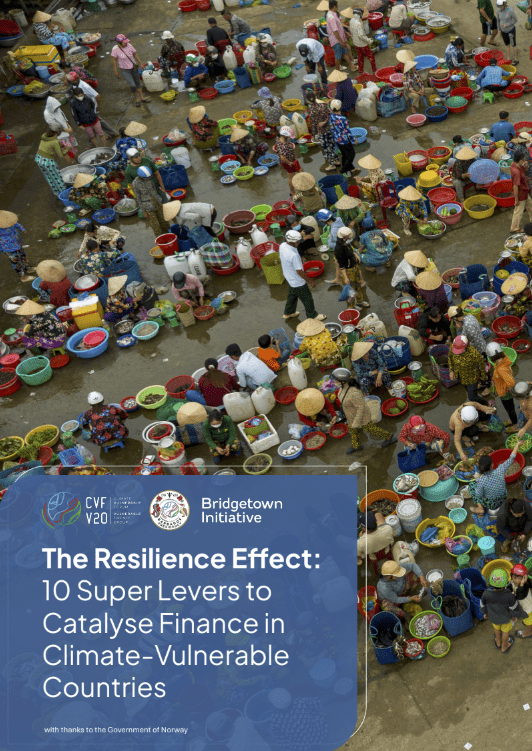
To address the urgent need for funding, the report identifies ten key “super levers” that could help generate an additional $210 billion per year by 2030, allowing V20 nations to enhance resilience and meet their climate investment requirements.

These strategies involve strengthening country-driven economic initiatives, such as Climate Prosperity Plans (CPPs) and Just Energy Transition Partnerships, to better coordinate investments, develop project pipelines, and strategically allocate adaptation funding across various sectors.

Other recommendations include expanding and standardizing carbon markets, implementing robust carbon pricing mechanisms, and reallocating $100 billion from G20 nations’ IMF Special Drawing Rights (SDRs) to offer concessional financing for V20 countries.

The report also proposes introducing solidarity levies on high-emission industries like shipping and aviation to generate $50-100 billion annually for climate finance. Additionally, it advocates for redirecting fossil fuel subsidies to support clean energy and nature-positive investments.

Further, it emphasizes the importance of reforming capital adequacy requirements in banking regulations to reduce financing costs for clean infrastructure in emerging markets, enhancing local currency solutions to mitigate sovereign currency risks, and making sovereign disaster insurance more affordable.

The report warns that without securing the necessary financial resources, V20 nations could suffer potential annual economic losses of up to $100 billion due to climate-related impacts.

TAGGED: Climate Vulnerable Forum, CVF, V20, Vulnerable 20 Group of Finance Ministers

Sign Up For Daily Newsletter

Be keep up! Get the latest breaking news delivered straight to your inbox.

By signing up, you agree to our Terms of Use and acknowledge the data practices in our Privacy Policy. You may unsubscribe at any time.
Victor Okeyo January 21, 2026 January 30, 2025
Share This Article
Facebook Twitter Email Copy Link Print
What do you think?
Love0
Sad0
Happy0
Sleepy0
Angry0
Dead0
Wink0
Leave a comment Leave a comment

Leave a Reply Cancel reply

Your email address will not be published. Required fields are marked *

YOU MAY ALSO LIKE

Will cheap EVs from China wean Kenya off its second‑hand car dependence?

There is appetite for Chinese EVs but sparse charging infrastructure and taxes still discourage adoption. Seth Onyango and Derrick Opar,…

Climate NewsEast AfricaEnergyTechnology
April 15, 2026

Oil shock from Iran crisis clouds global shift to clean energy

Rising oil market turmoil linked to the Iran crisis is threatening to slow the global shift to renewable energy, as…

All newsClimateClimate NewsElectric VehiclesEnergyEnergyEnvironment
April 2, 2026

Kenyan manufacturers ramp up efficiency under stricter rules

Kenyan manufacturers are moving fast to cut waste and sharpen efficiency as tighter rules take hold. Officials say the changes…

Climate NewsEast AfricaEnergy
March 9, 2026

How African governments are adjusting to shocks from the war on Iran

The immediate policy response across much of Africa is likely to focus on fiscal containment and debt management. Derrick Opar,…

Climate NewsEnergy
March 5, 2026
We use our own and third-party cookies to improve our services, personalise your advertising and remember your preferences.
  • My Bookmark
  • Interests
  • Contact Us
  • Blog Index
  • Complaint
  • Advertise
  • Exclusives
  • Learn How
  • Support
  • Solutions
  • About Us
  • Terms And Conditions
  • Editorial Policy
  • Marketing Solutions
  • Industry Intelligence

Follow US: 

© 2025 One Planet Agency.  All rights reserved.

© 2025. All Rights Reserved. One Planet Agency
adbanner
AdBlock Detected
Our site is an advertising supported site. Please whitelist to support our site.
Okay, I'll Whitelist
Welcome Back!

Sign in to your account

Register Lost your password?