
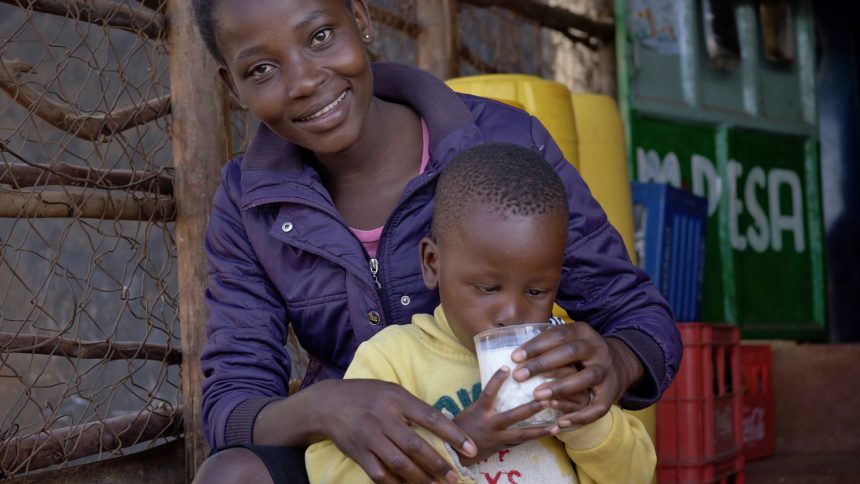
How do we get more safe milk into Kenyan homes while helping informal dairy sector vendors grow stronger businesses?
This is the question driving More Milk for Lives and Livelihoods 2 (MoreMilk 2), a new county-led initiative by the Kenya Dairy Board (KDB) and the International Livestock Research Institute (ILRI).
Between 25 March and 2 April 2025, the MoreMilk 2 team initiated a series of technical engagements across Uasin Gishu, Nakuru, and Nyandarua—the three counties where the initiative will initially roll out.
These consultations with county leadership and stakeholders aimed to co-design an approach that aligns with local priorities, with a long-term vision of scaling it to other counties across Kenya.
The goal?
To professionalize Kenya’s informal dairy sector, where the majority of Kenyans purchase their milk, making it safer, more compliant, inclusive, and economically viable for farmers, vendors, and customers alike.
At its core, MoreMilk 2 is about supporting countries to unblock the potential of informal milk markets for better health, better businesses, and better livelihoods.
What makes MoreMilk 2 different?
MoreMilk 2 builds on the success of MoreMilk 1, a pilot initiative led by ILRI in Eldoret that demonstrated how informal milk vendors can be agents of change when given the right support. It does this through:
Repositioning informal vendors from problem to solution: MoreMilk2 is grounded in the reality that over 70% of milk consumed in Kenyan households is sourced informally. Rather than criminalizing this sector, the initiative views it as an opportunity to establish a more suitable compliance path by supporting vendors in becoming legitimate actors in the food system.
“Despite having a strong formal sector, informal milk markets still dominate. We must find a way to work with them rather than against them. We need to rethink how we police the sector, how we empower them so they can be more compliant.” Maritim Kimutai, KDB Director Regulatory Services.
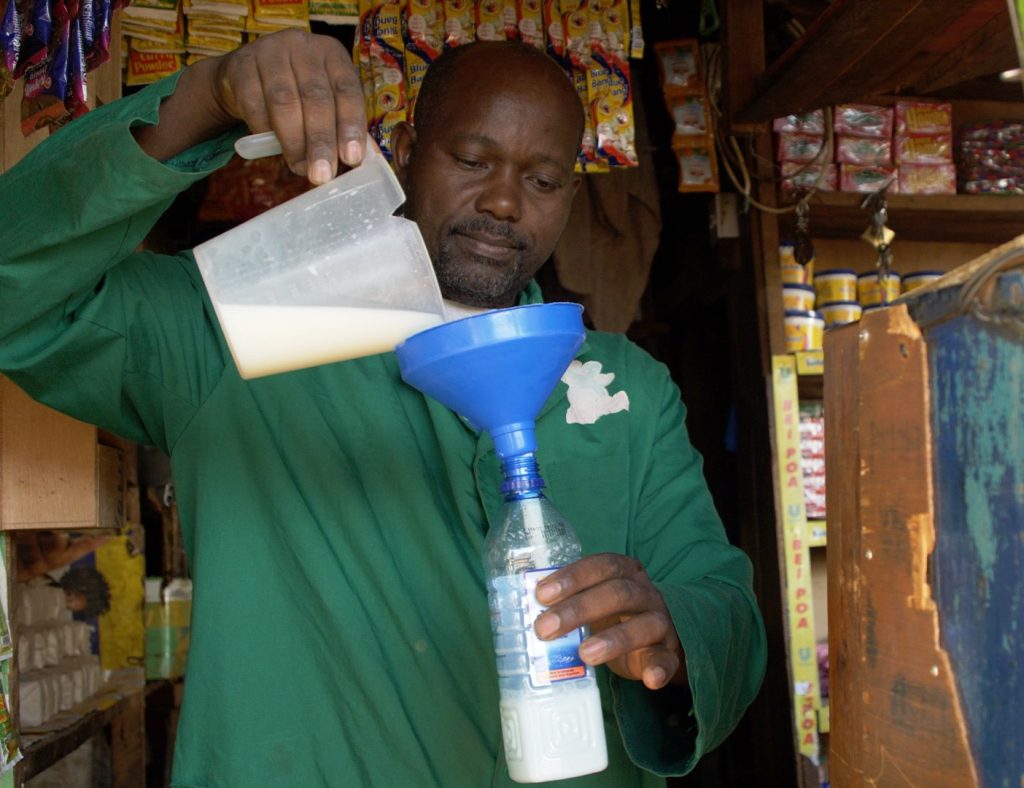
Bridging research, policy, and practice: MoreMilk 2 is informed by strong evidence generated by ILRI and is designed to translate that knowledge into action. The initiative brings together research, policy, and practice – ensuring that decisions are informed by what works on the ground and that policies/regulations/administrative practice is shaped by practical, real-world insights from the informal dairy sector.
Co-creating, not imposition: The county visits were not a project launch but a listening tour. The MoreMilk 2 team met with County Executive Committee Members (CECMs), directors of agriculture, livestock, public health, cooperatives and regulatory teams to understand existing efforts and ensure the initiative aligns with county priorities and strategies.
“With MoreMilk 1 in Eldoret, we saw vendors grow their businesses and children drinking more milk. MoreMilk 2 builds on that success with a system-wide focus from farmer to vendor.” Abraham Kiptanui Uasin Gishu County Director of Livestock Production.
Empowering rather than enforcing: Counties play a key role in shifting the model from top-down enforcement to bottom-up empowerment. MoreMilk 2 helps informal dairy vendors adopt best practices through training, coaching, and incentives – showing the value of safe milk as a path to business growth, community health, and consumer trust.
“Nakuru does not condemn informal vendors; instead, it tries to organize and train them. That’s why the MoreMilk2 initiative resonates well with us, as it seeks to invest in and build the capacity of informal sector vendors rather than sidelining them.” Virginia Ngunjiri, Director of Livestock Production, Nakuru County.
Looking at milk safety and beyond. The initiative goes beyond milk safety – offering training in business skills, promoting gender inclusion, and integrating climate resilience into everyday practices. It is a project that builds capacity within informality, providing vendors with practical tools and incentives to improve milk safety, earn more, and expand their businesses.
“MoreMilk2 is not just about milk. It is about dignity. It is about equity. And it is about building a system where everyone – vendors, farmers, consumers, government – wins,” Silvia Alonso, Principal Scientist, ILRI.
“Nyandarua is a dairy-producing county, but not yet a dairy-consuming one. By strengthening the local dairy Markets, we can increase access to milk for our children while opening new opportunities for our farmers and vendors.” Francis Miring’u County Executive Committee Member for Health Services.
What next?
These first county visits have laid the foundation for a co-owned, county-driven implementation. The energy and insights from Uasin Gishu, Nakuru, and Nyandarua reaffirm a shared commitment to transforming Kenya’s dairy sector from the bottom up.
Moving forward, the initiative will:
Continue engaging with county governments and local partners.
Roll out a comprehensive vendor training and certification program.
Support the development of inclusive and safe informal milk market hubs.
Strengthen county-level policy and investment environment for long-term sustainability.
The ambition is clear:
To deliver more safe milk to more households – while unlocking more value for informal vendors, farmers, and communities.
