
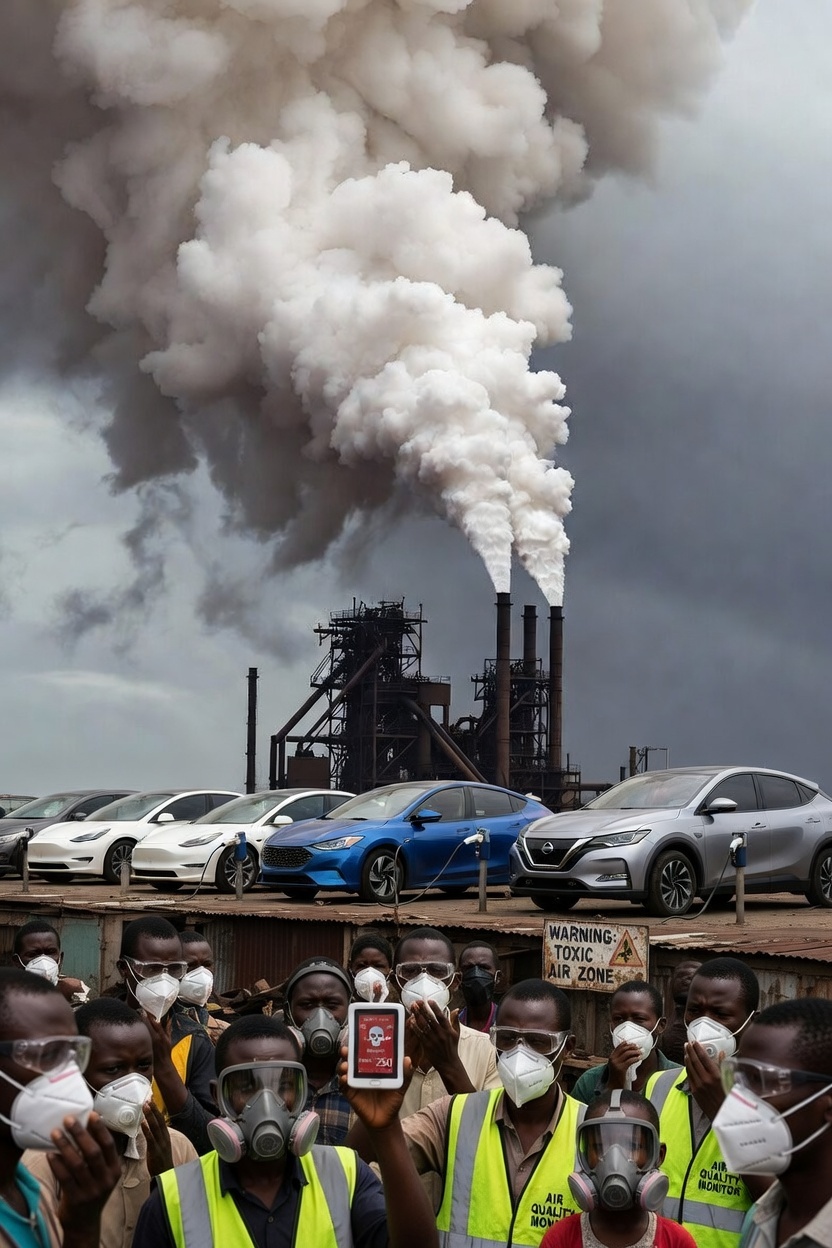
A flagship cobalt operation supplying some of Europe’s biggest carmakers is facing fresh scrutiny after investigators linked its rapid expansion to toxic emissions and a mounting public health crisis in the Democratic Republic of Congo.
By Conrad Obiero, OPA News Agency
A vast cobalt processing plant run by China’s CMOC Group in the Democratic Republic of Congo is emitting toxic gases that have triggered a public health crisis and displaced more than 10,000 people, according to a new investigation.
An investigation by the Environmental Investigation Agency US (EIA) and Congolese group PremiCongo focusing on the Tenke Fungurume mine and a massive cobalt processing facility that opened in 2023 shows the plant, roughly the size of 500 soccer fields, continues to emit large volumes of sulfur dioxide (SO₂), a toxic gas produced during copper-cobalt processing.
According to the report, titled Toxic Transition, communities living near the mine have reported frequent nosebleeds, persistent coughs and even vomiting blood since the facility began operations. Increases in miscarriages and birth defects have also been reported.
Researchers analysed more than 1,200 anonymised medical records from a nearby clinic, conducted independent air-quality monitoring and interviewed workers, residents and company insiders. They said the evidence points to a surge in SO₂ pollution linked to the expanded cobalt processing.
“The report shines a light on the human cost of the world’s energy transition and electric vehicle boom. Communities have long believed they were victims of the unchecked growth of the Tenke Fungurume mine,” said PremiCongo coordinator Christian Bwenda.
Cobalt is a critical mineral used in electric vehicle batteries, and demand has surged as the global push toward cleaner energy accelerates. About 43% of the world’s cobalt went into EVs in 2024.
CMOC, the Chinese mining group, produced roughly half of the world’s mined cobalt that year, largely through operations in the DRC. At Tenke Fungurume, the company processes copper-cobalt ore into cobalt hydroxide, which is sold to major battery manufacturers.
Air monitoring conducted between September 2024 and January 2025 reportedly found SO₂ levels exceeding international standards. Investigators also said they learned that some machinery continued running even after alarms sounded, with workers allegedly reluctant to evacuate for fear of reprisal.
CMOC subsidiary Tenke Fungurume Mining (TFM) disputed the claims. The company said monitoring data collected in late 2024 and early 2025 showed no pollution beyond regulatory limits and that it enforces strict safety rules requiring unsafe operations to be halted.
The report also traces cobalt from the mine into global electric vehicle supply chains. According to EIA, cobalt from Tenke Fungurume is used in EVs sold by automakers including BMW, Mercedes-Benz, Peugeot and Volkswagen.
None of the companies denied indirect sourcing from the mine. Mercedes-Benz said it had opened dialogue with TFM following the report, while BMW said it investigates any indications of supply-chain violations, while Stellantis acknowledged sourcing from TFM and said a third-party audit had identified reports of serious illness linked to pollution near the processing plant.
The report authors said the case highlights weak governance around the mining of critical minerals used in the energy transition.
“If we want the energy transition to be more than a win-lose game, we need transparent traceability of transition minerals, especially cobalt,” said EIA executive director Alexander von Bismarck.
One Planet Agency
