
In a historic milestone, the government of Tanzania today officially inaugurated the J.P. Magufuli (Kigongo–Busisi) Bridge, a monumental infrastructure project that promises to transform regional connectivity and economic development.
Spanning 3 kilometers across Lake Victoria, this bridge is now the longest in East and Central Africa and ranks as the seventh longest on the African continent.
The bridge, constructed to facilitate four lanes of vehicular traffic, emergency shoulders, and pedestrian walkways, marks a significant leap in regional transport infrastructure. It replaces the lengthy three-hour ferry crossing with a mere three-minute drive, dramatically enhancing mobility for residents, traders, and tourists alike. With the capacity to support 12,000 vehicles daily and a load capacity of up to 160 tonnes, the bridge is set to serve as a vital artery linking the Mwanza and Geita regions, unlocking new opportunities for trade and economic growth.
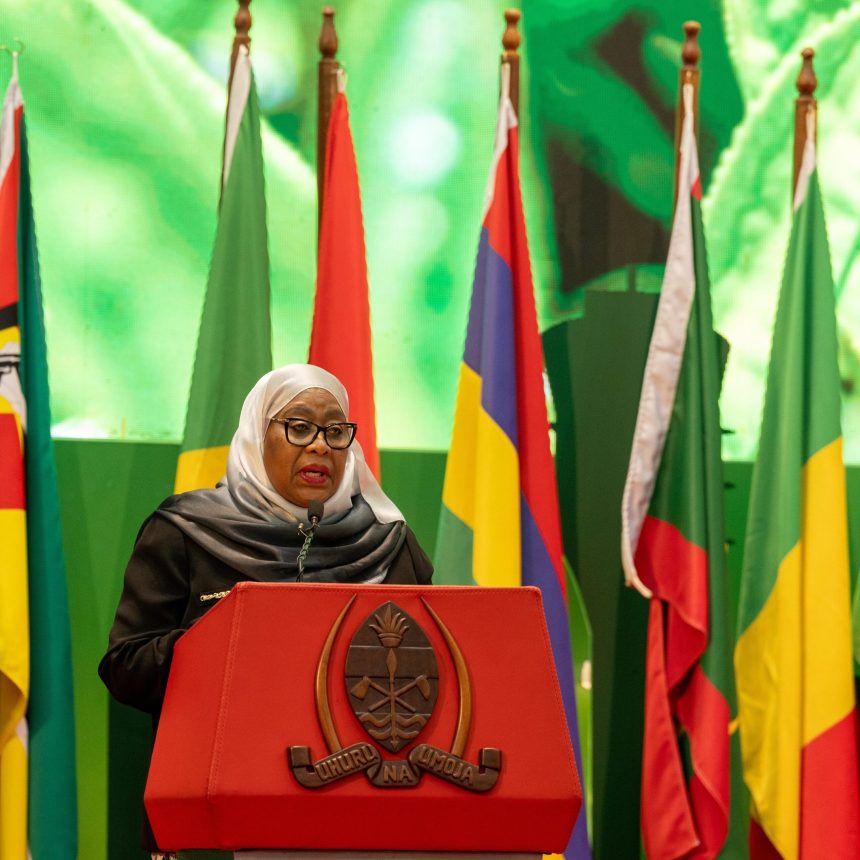
“The Kigongo–Busisi Bridge is a bridge of opportunities for women, youth, and entrepreneurs,” affirmed President Samia Suluhu Hassan during the inauguration. “We made a promise, and we have delivered.” The project was initiated in 2020 during the late President John Pombe Magufuli’s leadership and went through a turbulent period, including financial constraints due to the COVID-19 pandemic. Despite these challenges, President Samia mobilized over TZS 611 billion to ensure the project’s completion, emphasizing the government’s steadfast commitment to national infrastructural development.
The economic implications of the bridge are significant. It is expected to boost fish exports by around 12% over the next five years, cut transportation costs, and improve access to remote regions rich in mining, agriculture, and tourism potential. Better connectivity promises to attract investments, diversify the economy, and create job opportunities across various sectors.
Construction employed over 34,800 Tanzanians, including more than 20,000 skilled workers. The project also fostered local industry growth by supporting nine subcontractors and 16 Tanzanian manufacturers and suppliers. Skilled labor training covered a broad range of disciplines, from cable-stay installation and concrete engineering to carpentry, welding, and bridge maintenance, thus building sustainably local expertise.
Notably, the project integrated extensive capacity-building programs. On-site training for university students and young engineers through the Structured Engineers Apprenticeship Programme (SEAP) aimed at nurturing a new generation of professionals capable of maintaining and replicating such infrastructure in the future.
Constructed to international safety and environmental standards, the bridge features two 7-meter dual carriageways, pedestrian paths, emergency lanes, and a 520-meter cable-stayed central span. Environmental protocols were carefully followed to protect Lake Victoria’s delicate ecosystem.
The J.P. Magufuli Bridge is a flagship component of Tanzania’s broader infrastructure ambitious agenda, which includes projects like the Julius Nyerere Hydroelectric Power Project, Tanzania Liquefied Natural Gas Project, Standard Gauge Railway (SGR), and modernized ports and airports. These initiatives collectively aim to position Tanzania as a regional economic hub.
According to Hon. Abdallah Ulega, Minister of Works, the bridge not only supports the physical transport of people and goods but also symbolizes Tanzania’s resilience and aspirations for unity and progress. Echoing the words of first President Julius Nyerere, Ulega noted, “We don’t just build bridges, we build unity and opportunities for our people.”
As the longest bridge in East and Central Africa, the Kigongo–Busisi Bridge stands as a testament to Tanzania’s vision of economic growth, regional integration, and national resilience.
