One Planet AgencyOne Planet AgencyOne Planet Agency
  • Home
  • Climate News
    • Politics
    • Justice
    • Finance
    • Business
    • Nature
    • Science
    • Carbon Markets
    • Explainers
    • Series
    • All news
  • Climate Tech
    • AI and climate
    • Campaigns
    • Companies
    • Innovations
    • Science
    • Training
  • Green Markets
  • People & Voices
    • Interviews
    • Opinion
    • Women
    • Guest Writers
  • Energy
  • Deep Dives
    • Investigate
    • Expert Opinion
    • Analysis
  • Multimedia
    • Pictures
    • Videos
    • Podcast
Reading: What to Know About National Energy Compacts
Share
Notification Show More
Font ResizerAa
Font ResizerAa
One Planet AgencyOne Planet Agency
  • Home
  • Climate News
  • Climate Tech
  • Green Markets
  • People & Voices
  • Energy
  • Deep Dives
  • Multimedia
  • Home
  • Climate News
    • Politics
    • Justice
    • Finance
    • Business
    • Nature
    • Science
    • Carbon Markets
    • Explainers
    • Series
    • All news
  • Climate Tech
    • AI and climate
    • Campaigns
    • Companies
    • Innovations
    • Science
    • Training
  • Green Markets
  • People & Voices
    • Interviews
    • Opinion
    • Women
    • Guest Writers
  • Energy
  • Deep Dives
    • Investigate
    • Expert Opinion
    • Analysis
  • Multimedia
    • Pictures
    • Videos
    • Podcast
Have an existing account? Sign In
Follow US
One Planet Agency > Blog > Electric Vehicles > What to Know About National Energy Compacts
Electric VehiclesEnergyEnergy

What to Know About National Energy Compacts

By Marcus Kiprop Last updated: January 21, 2026 3 Min Read
Share
national energy compacts

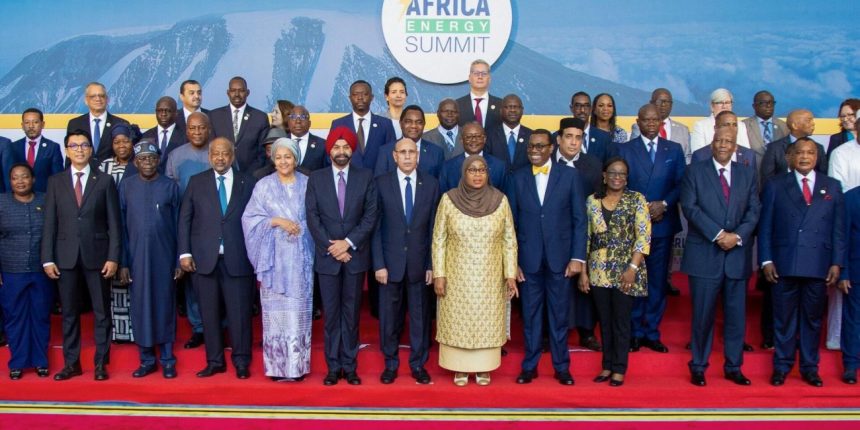
Mission 300 African Energy Summit emphasized a need to offer the 300 million people electricity connections by 2030 evidenced by an initiative that twelve African Countries took in issuing their National Energy Compacts. The National Energy Compacts are identifying specific Policy measures to address constraints across the energy sector and setting targets.

The continent hosts the largest population of people without electricity since up to 600 million people in Sub-Saharan Africa live without access. A figure that makes up for 83% of the world’s unelectrified population. The convention brings together the private sector led by the African Development Bank, the World Bank, and the Rockefeller Foundation which invested $15.9 million to expanding electricity access in the region.

This partnership is a demonstration of the determination of the World Bank Group and the African Development Bank Group to be bolder, bigger, and better at tackling one of the most pressing challenges in Africa. The initiative is the most recent manifestation of the World Bank Group’s commitment to become more impact-oriented and is the byproduct of a concerted work to build a better bank.

Electricity is a great step toward the transformation of people’s everyday lives across Africa, envisioning the growth and access that would be lighting the rural and most marginalized regions. This opening up of the regions would be determined by the availability of reliable, affordable, and sustainable energy as an enabler of job creation, and in turn, strengthened economies.

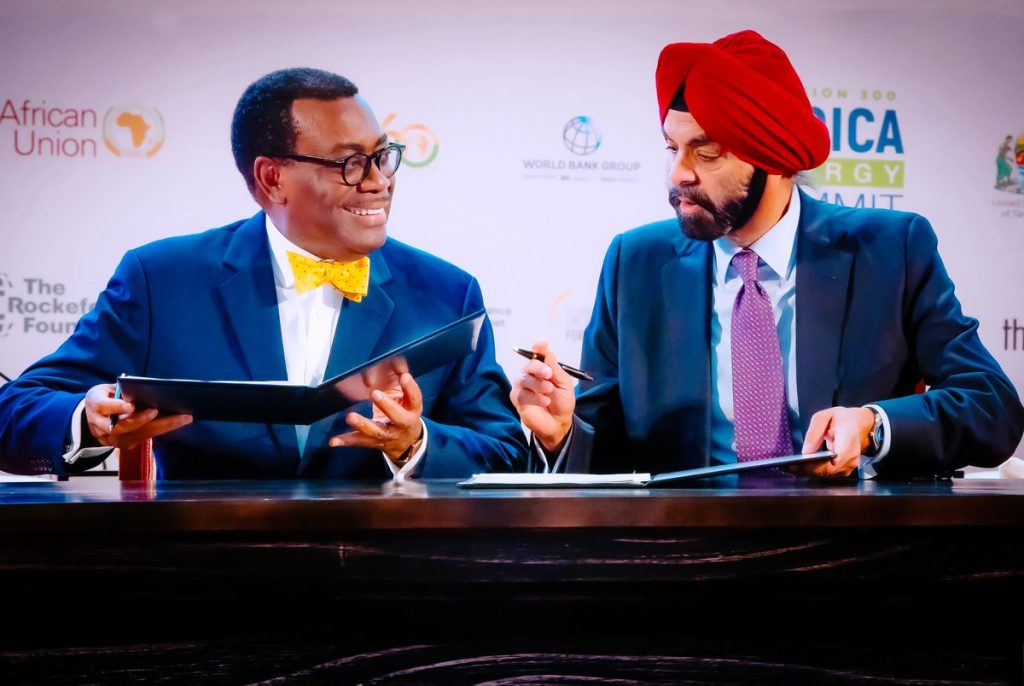
“Electricity access is the bedrock of all development. It is a critical ingredient for economic growth and job creation at scale. Our aspiration will only be realized with partnership and ambition,” said Ajay Banga, World Bank Group President.
national energy compacts
African Development Bank Director Dr. Adesina and World Bank President Ajay Banga courtesy @ online

Ajay further emphasized that government policy action is essential, as is financing from multilateral development banks, and private sector investments to see this through.

Faced with the climate change crisis, the important role of energy diversification has amplified as a path to driving development and job creation. Among the countries that submitted their national energy compacts are; Chad, Côte d’Ivoire, the Democratic Republic of Congo, Liberia, Madagascar, Malawi, Mauritania, Niger, Nigeria, Senegal, Tanzania, and Zambia.

The National Energy Compacts set ambitious targets with timelines for implementation to:

  1. expand energy infrastructure at competitive costs,
  2. leverage the benefits of regional power integration,
  3. embrace distributed renewable energy and clean cooking solutions as critical elements of the access agenda,
  4. foster greater private sector participation to unlock additional resources, and
  5. strengthen utilities.
TAGGED: 300 million, African Development Bank Group, Mission 300 African Energy Summit, National Energy Compacts, World Bank Group

Sign Up For Daily Newsletter

Be keep up! Get the latest breaking news delivered straight to your inbox.

By signing up, you agree to our Terms of Use and acknowledge the data practices in our Privacy Policy. You may unsubscribe at any time.
Marcus Kiprop January 21, 2026 February 7, 2025
Share This Article
Facebook Twitter Email Copy Link Print
What do you think?
Love0
Sad0
Happy0
Sleepy0
Angry0
Dead0
Wink0
Leave a comment Leave a comment

Leave a Reply Cancel reply

Your email address will not be published. Required fields are marked *

YOU MAY ALSO LIKE

Will cheap EVs from China wean Kenya off its second‑hand car dependence?

There is appetite for Chinese EVs but sparse charging infrastructure and taxes still discourage adoption. Seth Onyango and Derrick Opar,…

Climate NewsEast AfricaEnergyTechnology
April 15, 2026

Oil shock from Iran crisis clouds global shift to clean energy

Rising oil market turmoil linked to the Iran crisis is threatening to slow the global shift to renewable energy, as…

All newsClimateClimate NewsElectric VehiclesEnergyEnergyEnvironment
April 2, 2026

Kenyan manufacturers ramp up efficiency under stricter rules

Kenyan manufacturers are moving fast to cut waste and sharpen efficiency as tighter rules take hold. Officials say the changes…

Climate NewsEast AfricaEnergy
March 9, 2026

How African governments are adjusting to shocks from the war on Iran

The immediate policy response across much of Africa is likely to focus on fiscal containment and debt management. Derrick Opar,…

Climate NewsEnergy
March 5, 2026
We use our own and third-party cookies to improve our services, personalise your advertising and remember your preferences.
  • My Bookmark
  • Interests
  • Contact Us
  • Blog Index
  • Complaint
  • Advertise
  • Exclusives
  • Learn How
  • Support
  • Solutions
  • About Us
  • Terms And Conditions
  • Editorial Policy
  • Marketing Solutions
  • Industry Intelligence

Follow US: 

© 2025 One Planet Agency.  All rights reserved.

© 2025. All Rights Reserved. One Planet Agency
adbanner
AdBlock Detected
Our site is an advertising supported site. Please whitelist to support our site.
Okay, I'll Whitelist
Welcome Back!

Sign in to your account

Register Lost your password?