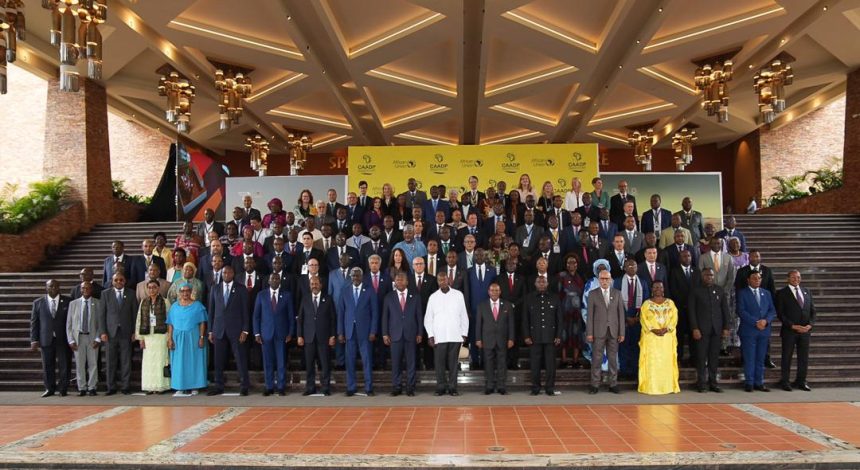
One Planet AgencyOne Planet AgencyOne Planet Agency
  • Home
  • Climate News
    • Politics
    • Justice
    • Finance
    • Business
    • Nature
    • Science
    • Carbon Markets
    • Explainers
    • Series
    • All news
  • Climate Tech
    • AI and climate
    • Campaigns
    • Companies
    • Innovations
    • Science
    • Training
  • Green Markets
  • People & Voices
    • Interviews
    • Opinion
    • Women
    • Guest Writers
  • Energy
  • Deep Dives
    • Investigate
    • Expert Opinion
    • Analysis
  • Multimedia
    • Pictures
    • Videos
    • Podcast
Reading: Malabo Declaration Catalyzing Africa’s Agricultural Transformation
Share
Notification Show More
Font ResizerAa
Font ResizerAa
One Planet AgencyOne Planet Agency
  • Home
  • Climate News
  • Climate Tech
  • Green Markets
  • People & Voices
  • Energy
  • Deep Dives
  • Multimedia
  • Home
  • Climate News
    • Politics
    • Justice
    • Finance
    • Business
    • Nature
    • Science
    • Carbon Markets
    • Explainers
    • Series
    • All news
  • Climate Tech
    • AI and climate
    • Campaigns
    • Companies
    • Innovations
    • Science
    • Training
  • Green Markets
  • People & Voices
    • Interviews
    • Opinion
    • Women
    • Guest Writers
  • Energy
  • Deep Dives
    • Investigate
    • Expert Opinion
    • Analysis
  • Multimedia
    • Pictures
    • Videos
    • Podcast
Have an existing account? Sign In
Follow US
One Planet Agency > Blog > Energy > Malabo Declaration Catalyzing Africa’s Agricultural Transformation
EnergyFoodLand

Malabo Declaration Catalyzing Africa’s Agricultural Transformation

By Marcus Kiprop Last updated: January 11, 2025 4 Min Read
Share
Malabo declaration

The Malabo Declaration, adopted by the African Union (AU) Heads of State and Government during their 23rd Ordinary Session in Malabo, Equatorial Guinea, on June 26-27, 2014, is a landmark policy framework aimed at transforming agriculture across Africa.

Building on the principles of the Comprehensive Africa Agriculture Development Programme (CAADP), the declaration emphasizes agriculture’s role as a cornerstone for sustainable development and poverty alleviation.

At its core, the Malabo Declaration reaffirms Africa’s commitment to agriculture-led growth as a central pillar of national and regional development strategies. This renewed dedication includes an ambitious goal of allocating at least 10% of public expenditure to agriculture, striving for an annual agricultural GDP growth of 6%. Such investment is critical for fostering agricultural productivity and driving economic transformation.

“We should uphold CAADP’s spirit while adopting new resolutions, including 6-strategic objectives to boost agricultural production, strengthen value chains, and enhance intra-African trade, as outlined in the Malabo Declarations,” said H.E. Ambassador Josefa Sacko.

The declaration had set bold targets, including the elimination of hunger by 2025 which has unfortunately fallen short. This goal focuses on promoting sustainable agricultural practices, improving food security, and enhancing nutrition across the continent. Additionally, it aims to halve poverty by engaging the youth in agricultural value chains, creating job opportunities for at least 30% of young people.

By tripling intra-African trade in agricultural commodities, the declaration seeks to boost regional market access and strengthen economic integration.

Recognizing the growing threat of climate change, the Malabo Declaration prioritizes resilience. It emphasizes sustainable land management and water control to ensure agricultural systems can adapt to climate variability. Moreover, it advocates for mutual accountability through peer review mechanisms to monitor and evaluate the progress of these commitments.
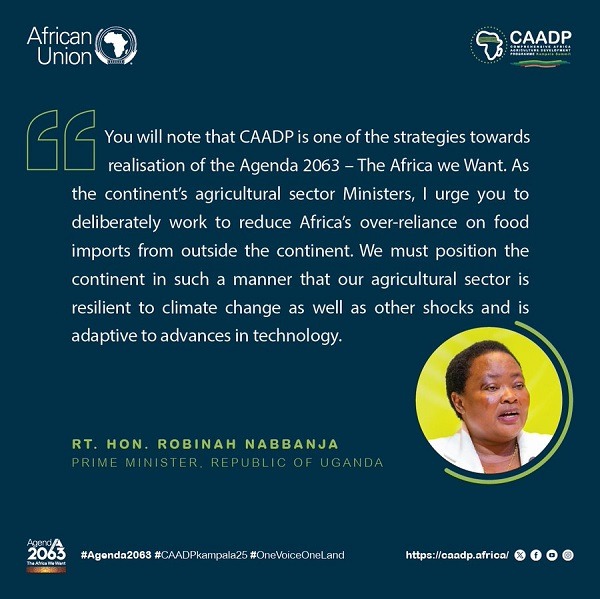
Malabo Declaration

Despite its ambitious vision, the implementation of the Malabo Declaration has faced significant challenges. Climate change, geopolitical tensions, economic downturns, and varying national priorities have all impeded progress. Biennial reviews introduced to track achievements revealed mixed results, with many countries struggling to meet the 2025 targets.

Recent updates from early 2025 indicate that no African country is currently on track to meet the CAADP targets under the Malabo Declaration. This revelation has spurred discussions on a post-Malabo agenda.

The African Union is now developing a new 10-year strategy (2025-2035) to sustain agricultural transformation efforts and align them with Africa’s broader Vision 2063 development goals.

The significance of the Malabo Declaration lies in its unwavering emphasis on agriculture as a catalyst for development. It has brought renewed attention to the importance of effective policy implementation, increased agricultural investment, and the integration of agriculture into broader socio-economic strategies. While progress has been uneven, the declaration remains a testament to Africa’s determination to leverage its agricultural potential to secure a prosperous and sustainable future for its people.

TAGGED: Agenda 2063, CAADP, CAADP-MALABO report, Comprehensive Africa Agriculture Development Programme

Sign Up For Daily Newsletter

Be keep up! Get the latest breaking news delivered straight to your inbox.

By signing up, you agree to our Terms of Use and acknowledge the data practices in our Privacy Policy. You may unsubscribe at any time.
Marcus Kiprop January 11, 2025 January 11, 2025
Share This Article
Facebook Twitter Email Copy Link Print
What do you think?
Love0
Sad0
Happy0
Sleepy0
Angry0
Dead0
Wink0
Leave a comment Leave a comment

Leave a Reply Cancel reply

Your email address will not be published. Required fields are marked *

YOU MAY ALSO LIKE

Will cheap EVs from China wean Kenya off its second‑hand car dependence?

There is appetite for Chinese EVs but sparse charging infrastructure and taxes still discourage adoption. Seth Onyango and Derrick Opar,…

Climate NewsEast AfricaEnergyTechnology
April 15, 2026

Oil shock from Iran crisis clouds global shift to clean energy

Rising oil market turmoil linked to the Iran crisis is threatening to slow the global shift to renewable energy, as…

All newsClimateClimate NewsElectric VehiclesEnergyEnergyEnvironment
April 2, 2026

One Continent, Two Realities – Why MCB’s energy strategy cannot be the same for Mauritius and Africa

Thierry Hebraud CEO, MCB Ltd, One Planet Agency In a global context where positive developments are increasingly scarce, it is…

EnergyEnergy
March 2, 2026

Africa Calls for Climate Finance, Adaptation Support and Equity at COP30 Opening in Brazil

Belem, Brazil – November 12, 2025 The United Republic of Tanzania, speaking on behalf of the African Group, has called…

Electric VehiclesEnergyEnergy
January 21, 2026
We use our own and third-party cookies to improve our services, personalise your advertising and remember your preferences.
  • My Bookmark
  • Interests
  • Contact Us
  • Blog Index
  • Complaint
  • Advertise
  • Exclusives
  • Learn How
  • Support
  • Solutions
  • About Us
  • Terms And Conditions
  • Editorial Policy
  • Marketing Solutions
  • Industry Intelligence

Follow US: 

© 2025 One Planet Agency.  All rights reserved.

© 2025. All Rights Reserved. One Planet Agency
adbanner
AdBlock Detected
Our site is an advertising supported site. Please whitelist to support our site.
Okay, I'll Whitelist
Welcome Back!

Sign in to your account

Register Lost your password?