
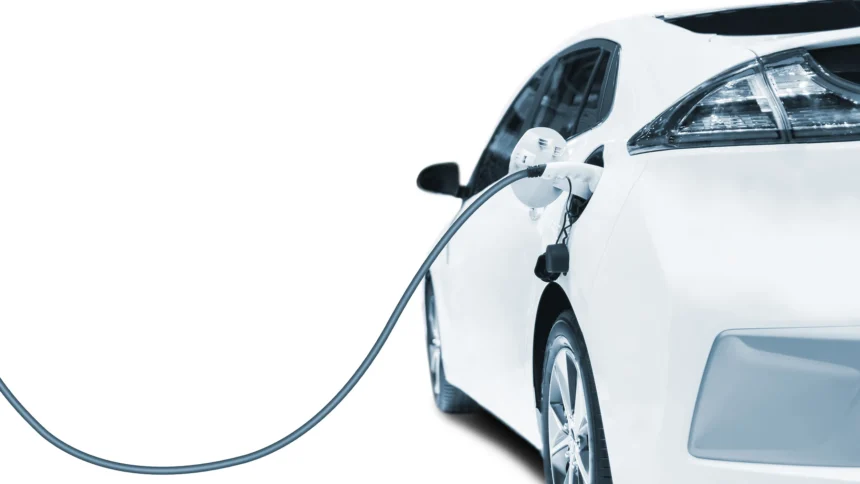
Africa’s most ambitious electric-vehicle experiment is under way in Ethiopia, where a sudden ban on new petrol and diesel cars is testing whether clean-energy leapfrogging can work in one of the continent’s poorest nations.
Hannington Osodo, One Planet Agency
When Ethiopia moved in early 2024 to halt the import of internal combustion engine vehicles, it became one of the first countries globally to impose an immediate, economy‑wide restriction on fossil‑fuel cars.
The decision arrived years ahead of the European Union’s planned 2035 phaseout and marked a dramatic intervention by a low‑income country still grappling with chronic electricity shortages and a per‑capita income of roughly $1,000.
The move appeared counter‑intuitive for a nation where nearly half the population lacks access to the grid and power cuts remain routine.
Yet the ban reflects a strategic economic calculation rather than a climate‑driven gesture. Ethiopia spends more than US$5 a year on fuel imports, a persistent drain on scarce foreign‑exchange reserves and a source of vulnerability to global oil price swings. Reducing this dependency has become a central pillar of the government’s industrial policy.
The logic is straightforward: if the country can replace imported petrol with domestically generated electricity, it can redirect billions towards infrastructure, manufacturing and social spending.
Ethiopia’s energy mix gives it an unusual advantage. Hydropower accounts for the overwhelming majority of its electricity generation, and the Grand Ethiopian Renaissance Dam — now partially operational — is set to expand capacity significantly once fully commissioned.
A rapid shift in the vehicle market
The policy has already reshaped the domestic automotive landscape. EV imports, supported by generous tax exemptions, have surged. Fully assembled electric cars face markedly lower duties than their petrol‑powered equivalents, while local assemblers benefit from near‑zero tariffs.
Chinese manufacturers, including BYD and several motorcycle producers, have moved quickly to establish assembly operations in and around Addis Ababa.
The government has also introduced new rules requiring charging infrastructure along major transport corridors and obliging importers to invest in charging networks as a condition of market entry.
Officials argue that this will accelerate private‑sector participation and reduce the fiscal burden of the transition.
Infrastructure gaps threaten momentum
Yet the scale of the challenge remains formidable. Ethiopia’s charging network is embryonic, with only a few hundred public chargers in operation — far short of what is required for mass adoption. Most are concentrated in the capital, leaving inter‑city travel difficult and rural electrification largely untouched.
Grid reliability poses an even greater constraint. Although Ethiopia generates substantial renewable power, distribution remains uneven and outages frequent.
Expanding the grid to rural areas will require billions of dollars in investment, much of which will depend on external financing.
Affordability is another obstacle. Even with tax incentives, electric cars remain out of reach for most households.
The market has bifurcated: wealthier urban consumers are adopting EVs, while middle‑income buyers face rising prices for used petrol vehicles as imports dry up. Banks, unfamiliar with EV technology and uncertain about battery lifespans, offer limited financing on unfavourable terms.
A model for Africa or an outlier?
Ethiopia’s experiment has drawn attention across the continent, but its replicability is uncertain. Few African countries possess Ethiopia’s combination of abundant renewable energy, low vehicle density and political willingness to impose an abrupt ban.
Nigeria relies heavily on gas‑fired power and suffers chronic grid instability; South Africa’s coal‑dependent system faces rolling blackouts; Kenya’s grid is relatively green but lacks surplus capacity.
For most countries, a more targeted approach — electrifying motorcycles, buses and commercial fleets with predictable routes — may prove more practical.
East Africa’s growing battery‑swapping networks for electric motorcycles, already deployed at scale in Kenya, Uganda and Rwanda, illustrate a pathway that avoids the need for extensive charging infrastructure.
Ethiopia’s policy is bold, economically rational and potentially transformative. But its success hinges on the state’s ability to expand the grid, attract investment and build technical capacity at a pace rarely achieved in low‑income economies.
If the country manages to align infrastructure, industry and regulation, it could redefine how developing nations pursue energy security and industrial upgrading. If it falters, the experience will offer a cautionary tale about the limits of ambition in the absence of institutional depth.
Either way, Ethiopia has forced a conversation that extends far beyond its borders: whether the global shift to electric mobility can be shaped not only by wealthy nations, but by those seeking to rewrite their development trajectory.
OPA News
