
One Planet AgencyOne Planet AgencyOne Planet Agency
  • Home
  • Climate News
    • Politics
    • Justice
    • Finance
    • Business
    • Nature
    • Science
    • Carbon Markets
    • Explainers
    • Series
    • All news
  • Climate Tech
    • AI and climate
    • Campaigns
    • Companies
    • Innovations
    • Science
    • Training
  • Green Markets
  • People & Voices
    • Interviews
    • Opinion
    • Women
    • Guest Writers
  • Energy
  • Deep Dives
    • Investigate
    • Expert Opinion
    • Analysis
  • Multimedia
    • Pictures
    • Videos
    • Podcast
Reading: How AI is Transforming Green Space Detection in Urban areas
Share
Notification Show More
Font ResizerAa
Font ResizerAa
One Planet AgencyOne Planet Agency
  • Home
  • Climate News
  • Climate Tech
  • Green Markets
  • People & Voices
  • Energy
  • Deep Dives
  • Multimedia
  • Home
  • Climate News
    • Politics
    • Justice
    • Finance
    • Business
    • Nature
    • Science
    • Carbon Markets
    • Explainers
    • Series
    • All news
  • Climate Tech
    • AI and climate
    • Campaigns
    • Companies
    • Innovations
    • Science
    • Training
  • Green Markets
  • People & Voices
    • Interviews
    • Opinion
    • Women
    • Guest Writers
  • Energy
  • Deep Dives
    • Investigate
    • Expert Opinion
    • Analysis
  • Multimedia
    • Pictures
    • Videos
    • Podcast
Have an existing account? Sign In
Follow US
One Planet Agency > Blog > Cities > How AI is Transforming Green Space Detection in Urban areas
CitiesClimate

How AI is Transforming Green Space Detection in Urban areas

By Victor Okeyo Last updated: February 21, 2025 4 Min Read
Share
urban areas

Climate change increasingly affects urban areas, striving to maintain livable environments through green spaces that reduce extreme heat, improve air quality, and enhance mental health. However, traditional satellite analyses have proven inadequate, missing up to 37% of urban vegetation, which leads to flawed urban planning decisions.

A research team led by Rumi Chunara, an associate professor at NYU, has developed a new AI-powered system that more accurately tracks urban areas’ greenery using satellite imagery.

“Previous methods relied on simple light wavelength measurements,” says Chunara. “Our system learns to recognize more subtle patterns that distinguish trees from grass, even in complex urban environments.”

Challenges in Measuring Urban Greenery

Accurately tracking urban vegetation has long been hindered by several factors, including variations in lighting, seasonal changes, and intricate city landscapes. These challenges result in inaccurate data, disproportionately affecting developing cities where green space disparities often go unaddressed.

For instance, in Karachi—Pakistan’s largest city—the study found an average of just 4.17 square meters of green space per person, significantly below the World Health Organization’s recommended minimum of 9 square meters per capita.

How AI Enhances Green Space Detection

The researchers’ system utilizes DeepLabV3+ and a “green augmentation” technique, training AI with diverse vegetation images to improve detection accuracy. This AI model achieved 89.4% accuracy with 90.6% reliability, a significant improvement over traditional methods.

“This type of data is crucial for urban planners to identify neighborhoods lacking greenery so they can develop new green spaces that deliver the most benefits,” Chunara explains.

The Karachi case study highlighted significant inequalities—poorer areas had minimal greenery, while wealthier neighborhoods featured tree-lined streets. Interestingly, areas with more paved roads, often associated with economic development, correlated with higher tree density. This trend is also observed in parts of Africa.

Kobie Brand, Regional Director of ICLEI Africa, emphasizes the importance of urban greenery:
“Urban parks and green spaces allow communities to connect with nature, improving health and well-being.”
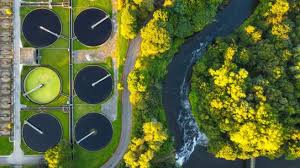
Urban areas

Cooling Cities and Reducing Pollution

Vegetation plays a crucial role in mitigating urban heat islands, pockets of extreme heat created by dense infrastructure.

“Anywhere in the U.S., small cities generate less heat than mega-cities,” notes research scientist Lahouari Bounoua. “The reason is the effect vegetation has in keeping temperatures under control.”

Despite similar population densities, Singapore has 9.9 square meters of green space per person, surpassing WHO recommendations through deliberate urban planning.

Climate scientist Professor Vivek Shandas highlights, “Tree canopies and green spaces significantly reduce heat in urban areas, providing natural cooling even under extreme heat conditions.“

Implications for African Cities Facing Rapid Urbanization

Many African cities are experiencing rapid urbanization with limited resources, often leading to insufficient green spaces. AI-driven tracking can help these cities prioritize tree planting and park development, strengthening their climate resilience.

To achieve this, African cities must integrate AI-powered green mapping into their urban planning processes and foster partnerships between AI researchers and city authorities.

Chunara’s team has made their methodology publicly available, enabling global adaptation. AI is poised to become an essential tool in data-driven climate solutions, from air pollution tracking to water management.

“By making this methodology openly accessible, we hope cities worldwide will use AI to build a greener, healthier future,” says Chunara.

TAGGED: Greening cities, Greening urban areas, Urban areas

Sign Up For Daily Newsletter

Be keep up! Get the latest breaking news delivered straight to your inbox.

By signing up, you agree to our Terms of Use and acknowledge the data practices in our Privacy Policy. You may unsubscribe at any time.
Victor Okeyo February 21, 2025 February 21, 2025
Share This Article
Facebook Twitter Email Copy Link Print
What do you think?
Love0
Sad0
Happy0
Sleepy0
Angry0
Dead0
Wink0
Leave a comment Leave a comment

Leave a Reply Cancel reply

Your email address will not be published. Required fields are marked *

YOU MAY ALSO LIKE

Oil shock from Iran crisis clouds global shift to clean energy

Rising oil market turmoil linked to the Iran crisis is threatening to slow the global shift to renewable energy, as…

All newsClimateClimate NewsElectric VehiclesEnergyEnergyEnvironment
April 2, 2026

African farmers to report carbon emissions under new global rules

New standards and upcoming guidance are expected to boost the credibility and consistency of climate reporting, ensuring farm emissions and…

AgricultureClimate
March 4, 2026

African carbon credits enter aviation compliance market as CORSIA demand builds

The aviation sector’s hunt for credible offsets is opening a rare window for African carbon projects, with Econetix securing one…

AfricaCarbon MarketsClimateClimate News
February 27, 2026

Four out of every ten dollars invested in African start ups now goes to climate tech

Climate focused startups are quietly taking a larger share of Africa’s venture market, not only in capital raised but in…

AfricaClimateEntrepreneurshipTechnology
February 17, 2026
We use our own and third-party cookies to improve our services, personalise your advertising and remember your preferences.
  • My Bookmark
  • Interests
  • Contact Us
  • Blog Index
  • Complaint
  • Advertise
  • Exclusives
  • Learn How
  • Support
  • Solutions
  • About Us
  • Terms And Conditions
  • Editorial Policy
  • Marketing Solutions
  • Industry Intelligence

Follow US: 

© 2025 One Planet Agency.  All rights reserved.

© 2025. All Rights Reserved. One Planet Agency
adbanner
AdBlock Detected
Our site is an advertising supported site. Please whitelist to support our site.
Okay, I'll Whitelist
Welcome Back!

Sign in to your account

Register Lost your password?