
One Planet AgencyOne Planet AgencyOne Planet Agency
  • Home
  • Climate News
    • Politics
    • Justice
    • Finance
    • Business
    • Nature
    • Science
    • Carbon Markets
    • Explainers
    • Series
    • All news
  • Climate Tech
    • AI and climate
    • Campaigns
    • Companies
    • Innovations
    • Science
    • Training
  • Green Markets
  • People & Voices
    • Interviews
    • Opinion
    • Women
    • Guest Writers
  • Energy
  • Deep Dives
    • Investigate
    • Expert Opinion
    • Analysis
  • Multimedia
    • Pictures
    • Videos
    • Podcast
Reading: Is Geoengineering the Climate Savior or Pandora’s Box?
Share
Notification Show More
Font ResizerAa
Font ResizerAa
One Planet AgencyOne Planet Agency
  • Home
  • Climate News
  • Climate Tech
  • Green Markets
  • People & Voices
  • Energy
  • Deep Dives
  • Multimedia
  • Home
  • Climate News
    • Politics
    • Justice
    • Finance
    • Business
    • Nature
    • Science
    • Carbon Markets
    • Explainers
    • Series
    • All news
  • Climate Tech
    • AI and climate
    • Campaigns
    • Companies
    • Innovations
    • Science
    • Training
  • Green Markets
  • People & Voices
    • Interviews
    • Opinion
    • Women
    • Guest Writers
  • Energy
  • Deep Dives
    • Investigate
    • Expert Opinion
    • Analysis
  • Multimedia
    • Pictures
    • Videos
    • Podcast
Have an existing account? Sign In
Follow US
One Planet Agency > Blog > Climate > Is Geoengineering the Climate Savior or Pandora’s Box?
Climate

Is Geoengineering the Climate Savior or Pandora’s Box?

By Okeyo Victor Last updated: July 11, 2025 4 Min Read
Share

The World Meteorological Organization confirmed 2024 as the warmest year on record at about 1.55 degrees Celsius above the pre-industrial level. This has been attributed to climate change caused by greenhouse gas emissions. Traditional solutions, mitigation and adaptation may not be enough to avert the crisis, thus geoengineering.

Contents
What is Geoengineering?The Case

Consequently, geoengineering proposals have been put forward. However, as scientists and policymakers debate large-scale interventions like Solar Radiation Modification and Carbon Dioxide Removal, could it be our last resort or a dangerous gamble for the global community?

What is Geoengineering?

Geoengineering is the large-scale intervention in the Earth’s oceans, soils, and atmosphere to reduce the effects of climate change. There are two categories of geoengineering techniques: Solar Radiation Modification (SRM) and Carbon Dioxide Removal (CDR).
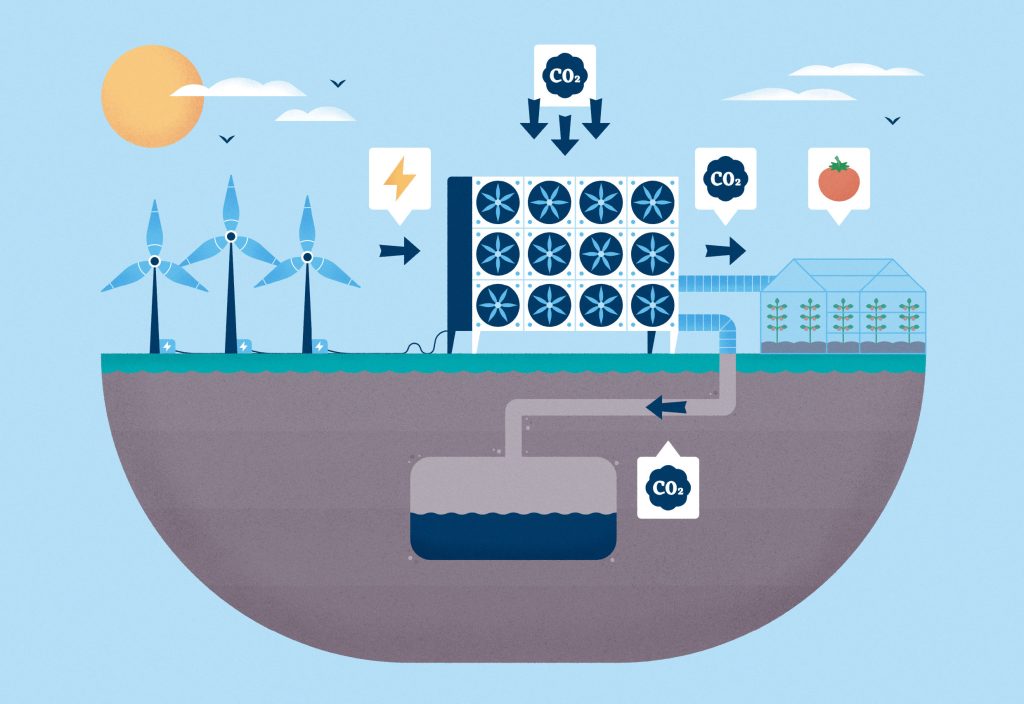
Direct Air Capture

SRM involves reflecting sunlight away from the Earth or allowing more heat back into space. The proposal involves ideas such as installing giant mirrors that orbit the Earth, spraying sulphate aerosols into the stratosphere, and modifying clouds, plants, and ice to make them more reflective.

The CDR approach extracts CO2 from other gases in the atmosphere by changing it into other forms of carbon through photosynthesis or artificial scrubbing. The separated carbon would then be either sequestered in biomass at the surface or transported away for storage in the ocean or underground.

The Case

Reports estimate that even with drastic cuts in carbon dioxide emissions, more than 1 billion tons of carbon dioxide would need to be removed from the atmosphere per year to hold the average temperature increases from global warming to 1.5 degrees Celsius.

According to David Keith, a professor of applied Physics, Harvard University, we could, with solar geoengineering, keep temperatures under 1.5 degrees Celsius.

“The evidence from all climate models and other analogues is that if one did it in combination with emissions cuts that the climate risk could be reduced in ways that they could not be reduced by emissions cuts alone,” he says.

In this regard, the race to invest in geoengineering has been gearing up over the past decade. For instance, Bill Gates has invested $4.5 million in geoengineering research, signaling his belief that while controversial, it deserves exploration as a method to mitigate climate change.

However, there is skepticism surrounding geoengineering. The UN’s top environmental agency chief, Inger Andersen, warned that a rush into experimental to cool the atmosphere by partially blocking the sun risked harming wildlife, oceans, the ozone layer and crops.

“To look at it purely as a risk-risk within climate, what happens if we do not decarbonise versus what happens if we deploy, climate engineering, is a false narrative for the whole of the global environment,” she said during the United Nations Environmental Assembly held in Nairobi in early 2024 where Nations failed to back a proposal by Switzerland and Monaco for a scientific research group to examine technology to block the sun’s rays.

Geoengineering is also faced with ethical concerns, with some critics arguing that it is an overreach to try and play God. Additionally, ocean fertilization techniques, such as adding iron to stimulate plankton growth, could lead to deoxygenation and the creation of “dead zones,” disrupting marine ecosystems.

Geoengineering is also controversial because modifying a complex and poorly understood global climate system introduces immense uncertainty..

Several studies advocate that rigorous testing should precede the implementation of any geoengineering proposal so that unintended consequences can be avoided.  

Read also about Geoengineering projects and Africa’s Potential in CDR.

Sign Up For Daily Newsletter

Be keep up! Get the latest breaking news delivered straight to your inbox.

By signing up, you agree to our Terms of Use and acknowledge the data practices in our Privacy Policy. You may unsubscribe at any time.
Okeyo Victor July 11, 2025 April 29, 2025
Share This Article
Facebook Twitter Email Copy Link Print
What do you think?
Love0
Sad0
Happy0
Sleepy0
Angry0
Dead0
Wink0
Leave a comment Leave a comment

Leave a Reply Cancel reply

Your email address will not be published. Required fields are marked *

YOU MAY ALSO LIKE

Experts urge WHO to declare climate crisis a global health emergency

The climate crisis has no patient zero and no vaccine. A growing group of experts says that is exactly why…

ClimateClimate JusticeClimate News
May 19, 2026

African women are fighting climate change from the bottom up, but the billions go elsewhere

The most effective climate adaptation in Africa is already happening, driven by women, and almost entirely unfunded. Nympha Ozougwu, One…

AfricaClimateClimate News
May 6, 2026

Tougher rules for emitters begin in Africa after ICJ

A landmark global court opinion has strengthened Africa’s legal position to demand climate accountability from major emitters, even as the…

AfricaClimateClimate JusticeClimate News
April 23, 2026

Oil shock from Iran crisis clouds global shift to clean energy

Rising oil market turmoil linked to the Iran crisis is threatening to slow the global shift to renewable energy, as…

All newsClimateClimate NewsElectric VehiclesEnergyEnergyEnvironment
April 2, 2026
We use our own and third-party cookies to improve our services, personalise your advertising and remember your preferences.
  • My Bookmark
  • Interests
  • Contact Us
  • Blog Index
  • Complaint
  • Advertise
  • Exclusives
  • Learn How
  • Support
  • Solutions
  • About Us
  • Terms And Conditions
  • Editorial Policy
  • Marketing Solutions
  • Industry Intelligence

Follow US: 

© 2025 One Planet Agency.  All rights reserved.

© 2025. All Rights Reserved. One Planet Agency
adbanner
AdBlock Detected
Our site is an advertising supported site. Please whitelist to support our site.
Okay, I'll Whitelist
Welcome Back!

Sign in to your account

Register Lost your password?