
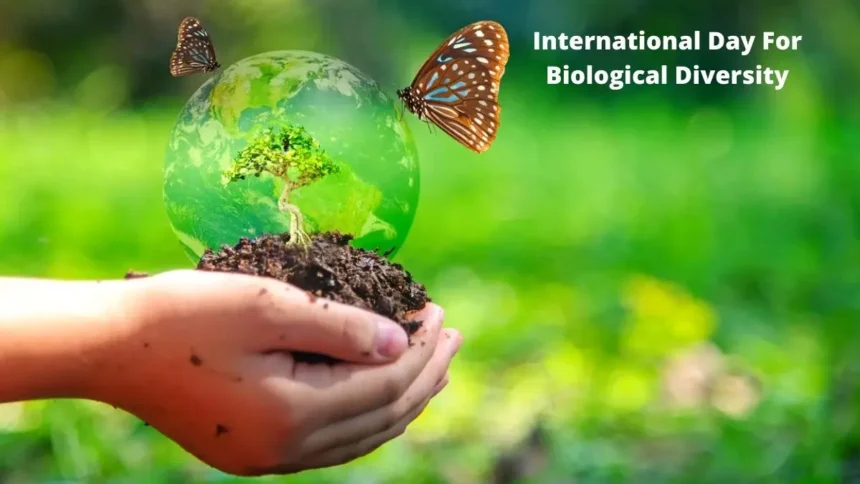
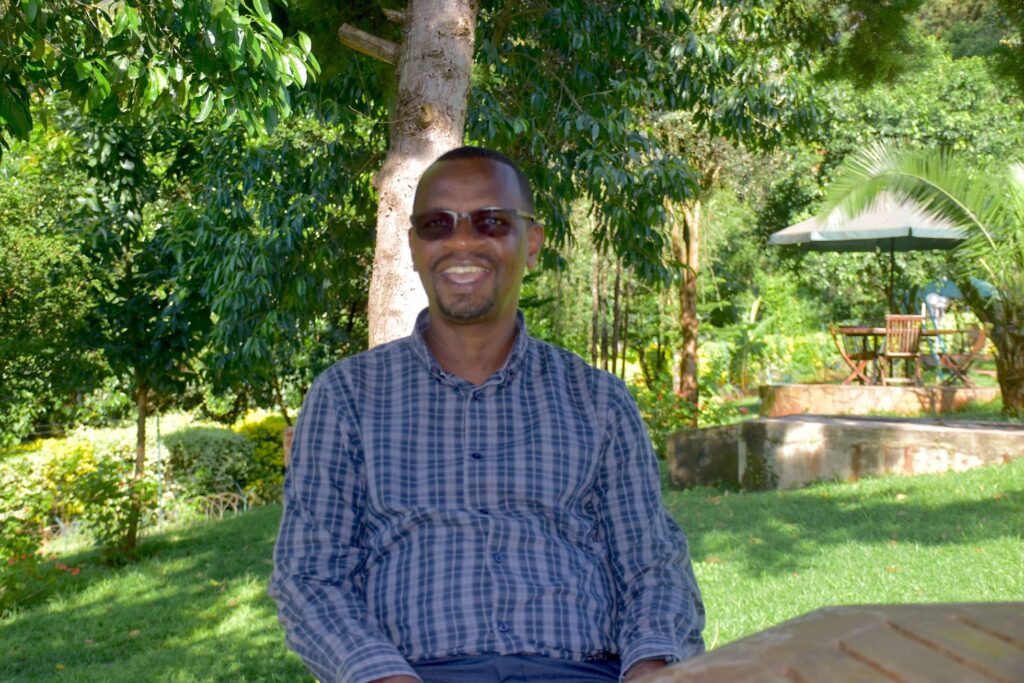
Biodiversity, the rich tapestry of life on Earth, is essential for maintaining healthy ecosystems and ensuring the survival of countless species, including humans. Yet, the modern world faces a severe biodiversity crisis driven by human activities and climate change. In recognition of the International Day of Biodiversity on May 22, we sat down with Jonathan Muriuki, the Regional Director, Global EverGreening Alliance’s Restore Africa programme, and an expert on biodiversity, to delve into the significance of biological diversity, the threats it faces, and innovative efforts like the Restore Africa program that aim to restore and protect our natural world.
Mr. Jonathan describes Biodiversity as a short form of biological diversity which refers to the diverse range of living organisms, from micro-organism to plants and animals that make up life on earth and the diverse ecosystems they live in.
This diversity is both in terms of the millions of species we have but also within the same species. For example, the acacia is a very common tree in Africa but globally we have over 1000 species of the tree and here in East Africa, we have over 60 species of the tree. And these many species and varieties interact to provide various products and services necessary for life.
This year’s theme for the International Day of Biodiversity is “Be part of the Plan.” It’s a call to action to governments, indigenous peoples and local communities, non-governmental organizations, lawmakers, businesses, and individuals to highlight the ways in which they are supporting the implementation of the Biodiversity Plan.
“For example, we are seeing a lot of campaigns around bees and their role in pollination and if they disappear, this will have an extremely negative impact on plant diversity and the yield of many agricultural crops. Another good example is in the area of human, animal and plant health. Natural enemies of disease-causing organisms are abundant when biodiversity is enhanced which minimizes risks of epidemics and drug resistance thus reducing our health budgets,” says Jonathan.
Human beings or rather their activities have been the main driving force of the loss of biodiversity. These include the destruction of habitats such as forests and grasslands to pave the way for agriculture, industries, and settlements. In the last 100 years or so, the loss of biodiversity has been unprecedented due to agriculture, and industrialization and has accelerated due to climate change and the rapid increase in population. Agriculture has contributed to the destruction of nearly 80% of the forests globally. Connected with industrialization is pollution of air, land, and water bodies which interferes with life support systems leading to the extinction of species that have low adaptive capacity.
The link between climate change and biodiversity loss is due to global warming brought on by the increase in emission of greenhouse gases from human activities. More specifically the burning of fossil fuels. Climate change especially impacts plant species because they are not able to move / migrate like animals and especially if their evolution is not fast enough to enable adaption to the changing climatic conditions.
Climate change is increasing extreme weather conditions and changing the habitats of many species. For example, some areas are becoming too hot, forcing some of the species to move to new habitats or become extinct. Extreme weather events are also causing direct deaths. Last year in Kenya we saw animals in the parks in Kenya dying from drought and this year, many have been killed by floods. Wild animals have been moving to human settlements in search of food and water and many of them end up being killed.
Jonathan believes an increase in biological diversity would support climate change mitigation and adaptation. “As stated above, biodiversity helps maintain ecosystem functions, which can help to mitigate the impacts of climate change. Forests and woodlands are important for capturing carbon dioxide from the atmosphere. Biodiversity can also help in climate change adaptation; this is supporting communities to cope with extreme weather events. “
“For example, one of the reasons we have food insecurity in Africa since the coming of the colonialists is because our food groups have been getting narrower and narrower. We have left many of the traditional foods we had been eating for maize, rice and wheat. But if we increase the diversity of the food we grow and eat, we can have more food security. It can be said that increase in biodiversity proffers adaptation benefits where the whole is greater than the sum of parts,” he says.

About Restore Africa and how it hopes to contribute to protecting and improving biological diversity
Restore Africa is a massive community-led land restoration programme of the global EverGreening Alliance. Its main objectives are to improve livelihoods, food security, and resilience of small holder farmers to climate change through the rehabilitation of 1.8 million hectares of degraded lands in Eastern and Southern Africa. The program aims to support over 1.5 million small holder families to adopt evergreen farming practices that can improve agricultural productivity and the soil. These include training and other capacity building activities, provision of tree seedlings, supporting development of tree-based value chains and promoting climate-smart agriculture.
Examples of these evergreening practices include agroforestry where farmers integrate trees into their farmlands crop and Farmer Managed Natural Regeneration where farmers take care and support trees and shrubs that naturally regenerate on the land from stumps and buried seeds. Restore Africa has kicked off activities in Kenya, Uganda, and Malawi, and will soon start in Zambia, Ethiopia and Tanzania.
Restore Africa is supported by private sector investors as part of their efforts to achieve zero emissions. It is therefore financed through voluntary carbon credits. Carbon credits, also known as carbon offsets, are a financial mechanism to support global efforts to reduce carbon emissions. Companies buy carbon credits to offset their hard-to-abate emissions, and this provides financial incentives to those that remove the carbon from the atmosphere or reduce emissions. In Restore Africa program, farmers will receive payment for carbon, they are able to remove from the atmosphere, once the projects costs are covered.
According to FAO statistics, over 60% of Africa’s agricultural land is degraded and improving these lands will have a significant impact on improving food security, livelihoods, and resilience to climate change in the continent.
Are African countries on the right track to prevent biodiversity loss?
Quite a number of initiatives are underway led by African governments. Here in Kenya, the government is spearheading an initiative to plant 15 billion trees. This is a move in the right direction.
Other initiatives include the Africa Forest Landscape Restoration Initiative (AFR100) through which 34 countries have pledged to restore over 100 million hectares of degraded land and the Great Green Wall Initiative that seeks to prevent Sahara from spreading southwards.
Jonathan says that we need to ensure we are planting the right trees in the right place and growing the trees. “Through Restore Africa, we are working to ensure the farmers keep the trees for the long term so that as much carbon from the atmosphere is sequestered. Restore Africa is also affiliated to the AFR100 initiative.”
As a country and a region, we want to increase agricultural productivity to meet the increasing population, how can we do that without impacting biodiversity?
“As the population is increasing, we have more mouths to feed. And there are ways to increase agriculture production sustainably. Agroforestry and other evergreening practices we are promoting under RESAf are such examples of sustainable agriculture practices. Past agricultural practices emphasizing single crop species have not delivered on the promise of increased productivity as they were proposed to do,” says Jonathan.
“Scientific evidence now proves that sustainable intensification can be achieved through regenerative agriculture and that total land productivity is enhanced with integrating trees, crops and livestock compared to single crops. Agroforestry creates the corridors in agricultural landscapes where genes can flow between forests and thus conserving biodiversity.”
The preservation and enhancement of biodiversity are critical not only for ecological health but also for human survival and well-being. As Jonathan highlighted, initiatives such as the Restore Africa program demonstrate the power of community-led efforts in combating biodiversity loss and mitigating climate change. By embracing sustainable agricultural practices and investing in the restoration of degraded lands, we can pave the way for a more resilient and productive future. As the world comes together on the International Day of Biodiversity, it is a timely
