
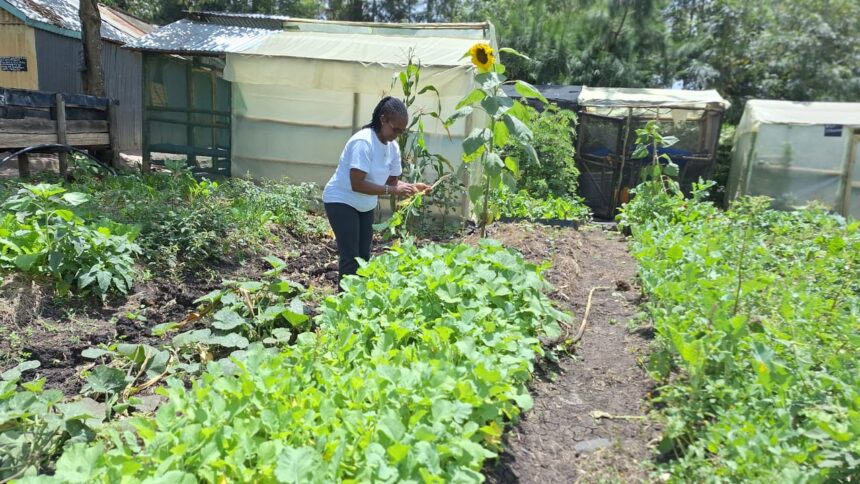
In recent years, there has been a significant shift in the food industry, as consumers in Kenya and globally are becoming increasingly aware of the health risks associated with food grown with chemical inputs. Consequently, they are actively seeking organic alternatives.
The shift to organic food is expected to grow exponentially as policies are increasingly being implemented to minimize chemical inputs.
For smallholder farmers, tapping into this lucrative market would require not only transitioning to organic practices but also understanding market dynamics, certification requirements, and consumer expectations.
The Community Sustainable Agriculture & Healthy Environmental Program (CSHEP) has been actively engaging with smallholder farmers through empowerment initiatives to ensure they do not miss out on the opportunity.
Founded in 2010, with offices in Kiserian and Ndeiya, CSHEP, with the mission to equip farming communities with awareness and skills that will lead to development opportunities for all, has been training farmers in agroecology and organic food production.
“Agroecology is sustainable since it utilizes locally available natural materials,” says Esther Kagai, director of CSHEP.
She further highlights that organic farmers do not incur any costs from buying expensive synthetic chemicals and fertilizers.
The increased preference for chemical-free, nutritious food has had a seismic effect on urban markets and restaurants.
“This means that farmers shifting to organic can access premium pricing,” she adds, pointing out supermarkets, farmer markets, and direct-to-consumer sales channels.

“That is why we find it prudent that farmers need to be aware of these opportunities. Our organization, apart from training, also connects farmers to buyers and organic food networks.”
However, transitioning to organic farming is just the first step. To fully benefit from the growing market, Esther says, the smallholder farmer has to ensure that their products meet recognized organic standards.
“Certification is crucial to the farmer in the transition. This is because it builds consumer trust, enhances market access, and allows farmers to sell their produce at premium prices.”
CSHEP is actively involved in ensuring the farmers are aware of the required standards. “We train and familiarize farmers on the Participatory Guarantee System (PGS), which is accessible as compared to the international organic certification, which can be costly and somewhat complex,” she adds.

PGS is a community-led certification process where farmers, consumers, and other stakeholders collectively ensure that organic standards are met. Instead of relying on external auditors, PGS encourages peer reviews, farm inspections, and shared learning among farmers to maintain credibility and transparency.
However, despite the visible growth, Esther says there is a need for more education on organic food advantages.
“There is still stiff competition from conventionally grown food, and this is not helped by the limited distribution channels for small farmers,” she says, emphasizing that many buyers are still unaware of organic benefits. “We need to create awareness through continuous education on organic food advantages.”
Through awareness campaigns, organizing community markets and events, and advocating for policies that smallholder organic farmer, CSHEP Kenya is actively in the forefront in championing the transition to organic farming.
CSHEP offers five-day training sessions on organic and bio-intensive mini-farming, combining indoor lessons with practical applications, and has trained approximately 300 urban farmers within Kiserian and its surrounding areas, focusing on organic food production.
“Our vision is to expand organic farming to more regions by training more youth and women in agroecology and strengthening networks between organic farmers and consumers. The government’s support is also crucial in promoting organic markets.”
Pointing out the Seeds and Plant Varieties Act that restricts seed sharing among farmers, she says that while intended to maintain seed quality, this regulation poses challenges for organic farmers who rely on traditional seed varieties adapted to local conditions.
To achieve their vision, CSHEP is positioning to encourage more farmers to embrace organic farming and finding innovative ways to have consumers support the organic movement by choosing locally grown organic food.
